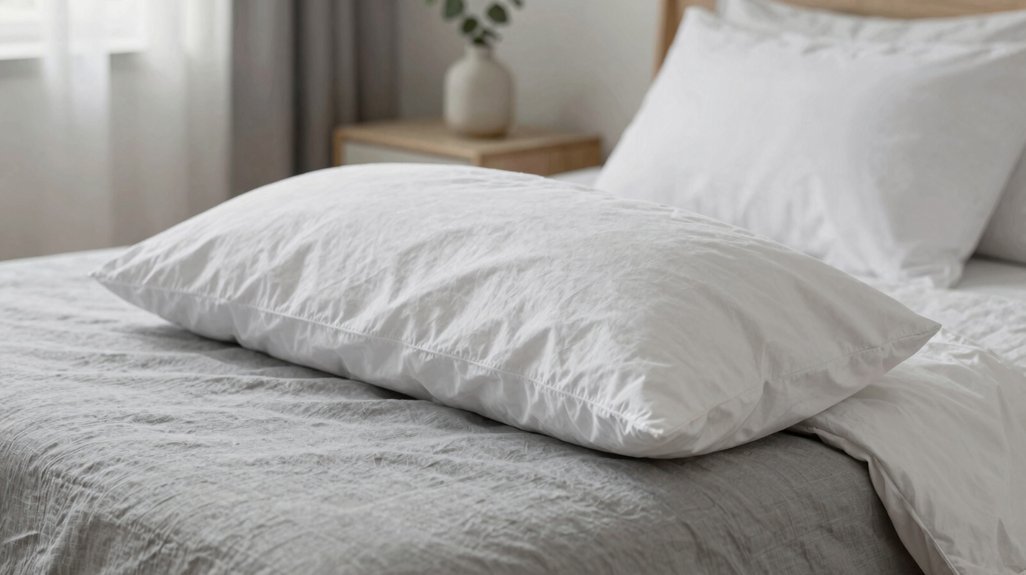
A bed sham is a decorative, structured cover, typically measuring 20″ × 26″ (standard), 20″ × 36″ (king), or 26″ × 26″ (Euro), that conceals your sleeping pillows while establishing visual hierarchy through layered textile composition.
Unlike utilitarian pillowcases, shams feature tailored closures: envelope overlaps, hidden zippers, or buttoned flanges, often bordered by 2″–4″ flanged edges or piped seams that maintain architectural rigidity.
You will encounter three primary constructions: knife-edge (sleek, seam-defined), flanged (extended fabric borders), and quilted (stitched, dimensional padding).
Material specifications range from 200–800 thread-count cotton percale or sateen to linen (140–200 gsm), silk (12–19 momme), and velvet (pile heights of 2–5 mm).
Your sham serves dual functions: aesthetic unification with duvet covers, coverlets, or bedspreads; and structural support for seated lounging.
The insert fill, whether down alternative (550–650 fill power), feather (600+ fill power), or foam (1.5–3 lb density), determines loft and compression recovery.
Care protocols vary by fiber: cotton tolerates 60°C machine washing; linen demands 40°C with mild detergent; silk requires pH-neutral solvents or professional dry cleaning.
You now understand the sham’s technical profile.
What remains unresolved is whether this decorative layer belongs in your nightly sleep environment or strictly in your staged, daylight presentation.
What Is a Sham for Your Bed?
Standard configurations include:
- Standard sham: shams measure 26 x 20 inches
- Queen: approximately 30″ x 20″
- King: approximately 36″ x 20″
- Euro shams: 26″ x 26″ (square format)
- Square format: 26″ × 26″ (industry standard)
- Placement: Rear positioning in layered arrangements
- Function: Structural backdrop for smaller decorative pillows
- Construction: Embellished front; solid fabric reverse with hidden zipper or overlapping envelope closure
- Evening: Place shams behind standard sleeping pillows as layered backrests
- Night: Remove from the bed entirely to preserve cleanliness and prevent flange compression
- Wash dark or richly colored shams separately to prevent dye transfer
- Select gentle cycles for embroidered or matelassé detailing
- Avoid high heat drying to prevent flange distortion
- Match settings to your pillow’s different sizes: standard (26″ × 20″), queen (30″ × 20″), king (36″ × 20″), or Euro (26″ × 26″)
You position these in front of sleeping-grade pillowcases, creating layered visual hierarchy. Unlike pillowcases, which prioritize protective accessibility, shams remain stationary decorative elements.
Euro shams specifically accommodate flexibility: they’ll prop against chair backs, anchor sofa arrangements, or form structural backdrops behind rectangular variants on the bed.
Recommended Products

【Natural Linen Fabric】 Made of grade ramie linen and cotton Natural linen fabric makes it soft, comfortable, and breathable—good workmanship, tightly sewn

Breathable Material: EIUE bed pillow for sleeping goes with a breathable cotton cover and breathable down alternative microfiber, which is friendly to skin and ensures you a comfortable night's sleep.

【Natural Linen Fabric】 Made of grade ramie linen and cotton Natural linen fabric makes it soft, comfortable, and breathable—good workmanship, tightly sewn
Sham vs. Pillowcase: What’s the Real Difference?
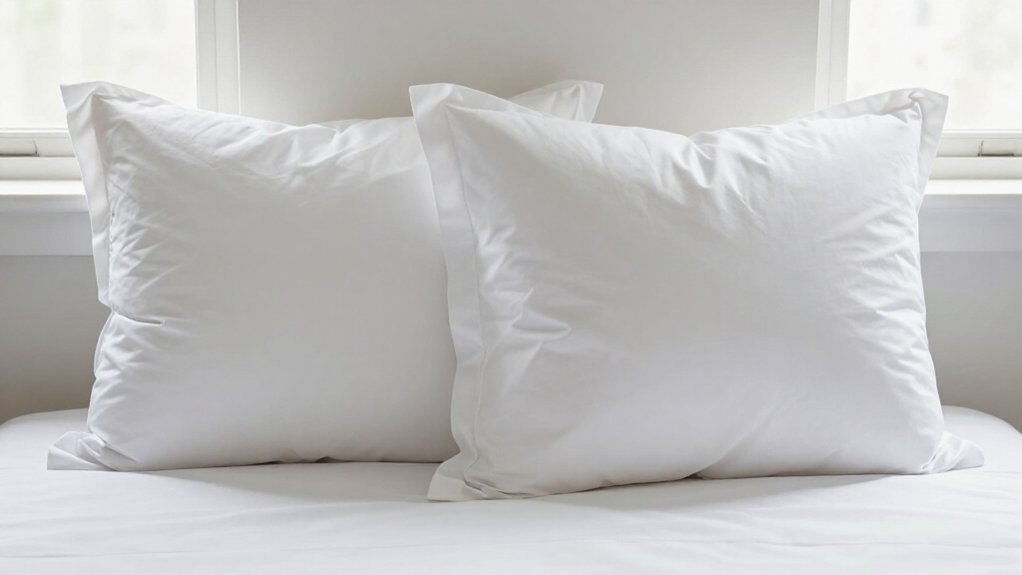
How do you distinguish between functional bedding and its decorative counterpart when both occupy the same visual space?
You use a pillowcase for hygiene and comfort, protecting your sleep pillow with a removable, washable cover that’s typically open on one side. You deploy a sham to create the false front, an embellished layer that presents a polished look.
Key Distinctions:
| Feature | Pillowcase | Sham |
|---|---|---|
| Primary function | Protection | Decoration |
| Closure | Open side | Envelope overlap; hidden zipper/buttons |
| Construction | Identical both sides | Ornate front, plain back |
| Placement | Directly on sleep pillow | In front of pillowcases |
Standard shams measure approximately 26″ × 20″, coordinating with corresponding pillow dimensions. You position pillow shams forward when styling, then move them behind or off your standard pillowcase-covered pillows for sleep.
Recommended Products

ULTRA-SOFT FEEL: Experience OEKO-certified (24.HCN.19195) pillowcases with double-brushed fabric that's gentle on skin. These pillow cases provide quiet, static-free sleep with soft and plush touch, offering both safety and cozy comfort
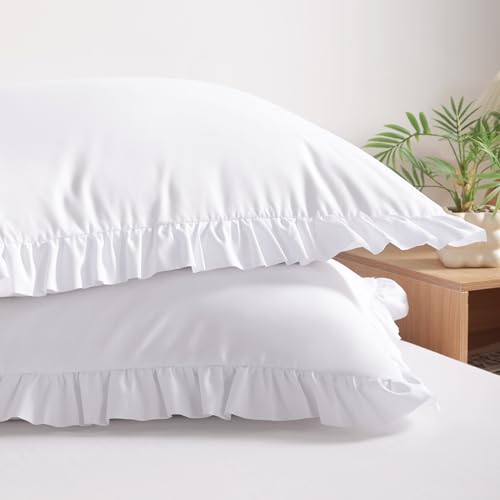
DECORATIVE RUFFLED EDGE: Soft ruffled trim adds texture and dimension for an easy bedding refresh. The versatile design complements farmhouse, romantic, and modern bedroom decor.

Practical 2 Set of Pillowcases: scalloped pillow cover set contain 2 pack pillowcases (pillows not included); It can match two pillows at once, ideal for family use; This provides convenient purchasing options, allowing users to easily coordinate pillows; Please confirm the size information before purchasing
Sham Sizes and Types Explained
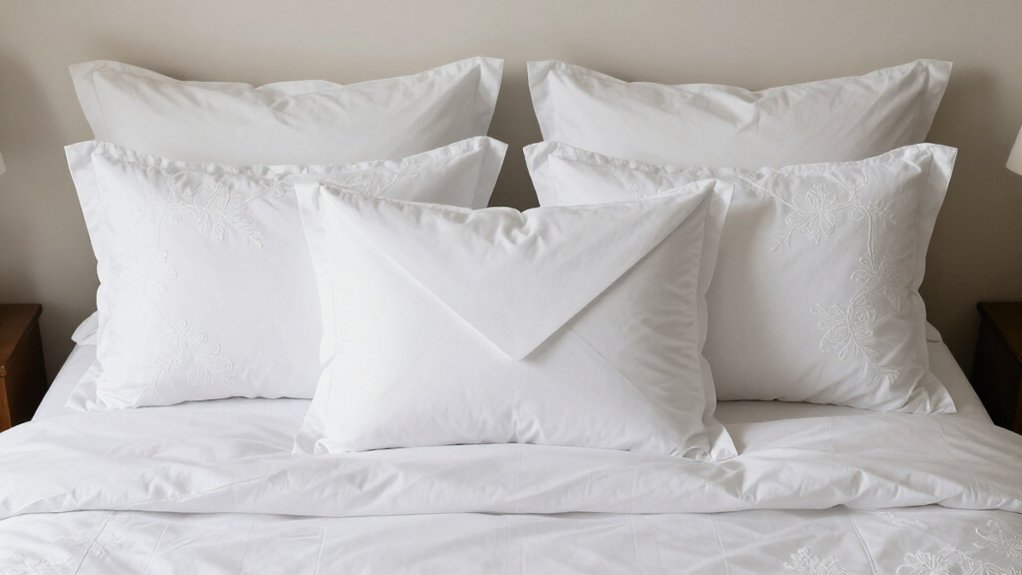
You’ll encounter two primary sham configurations when outfitting your bed: the rectangular bed sham, engineered for standard, queen, and king sleeping pillows measuring approximately 26″ × 20″, 30″ × 20″, and 36″ × 20″ respectively, and the square Euro sham, purpose-built for 26″ × 26″ Euro pillows that serve as foundational decorative layers.
Standard Sham Dimensions
| Size | Dimensions | Pillow Type |
|---|---|---|
| Standard | 26″ × 20″ | Standard sleeping pillow |
| Queen | 30″ × 20″ | Queen sleeping pillow |
| King | 36″ × 20″ | King sleeping pillow |
Euro Sham Features
The Euro sham’s dimensional parity, its width equaling its length, distinguishes it functionally from rectangular counterparts, which rely on proportional asymmetry to accommodate anatomically oriented sleeping pillows.
Recommended Products

【Material】Crafted from 100% cotton, this duvet cover set is durable, breathable, cozy, and soft. Cotton is renowned for its hypoallergenic properties, making it suitable for a restful night's sleep.

✔ 100% Organic Cotton : Soft, Natural Comfort : Crafted from 600 thread count organic cotton, these pillow shams offer a soft, smooth, and skin-friendly feel. Designed for lasting comfort, they are an ideal choice for high-quality, eco-conscious bedding.

PREMIUM FABRIC: Royale Linens Pillow Shams Set Are Manufactured Using Finest Quality 100% Double Brushed Microfiber. Making Them Breathable, Comfortable And Cozy. WASH BEFORE THE FIRST USE TO UNLOCK SOFTNESS
Standard Sham Dimensions
At 26 by 20 inches, standard shams accommodate rectangular bed pillows with precise dimensional correspondence to conventional sizing protocols.
Standard Pillow Shams
You’ll find that standard pillow shams and pillow covers serve identical protective and decorative functions, with shams measure 26 x 20 inches representing the industry baseline. This standard size creates proportional balance against headboard widths and complementary bedding layers.
Bed shams are typically manufactured with flange borders, envelope closures, or zipper mechanisms to secure standard rectangular bed pillows. Deviation from these specifications compromises visual continuity and functional integrity.
Comparative Dimensions
| Size | Dimensions | Application |
|---|---|---|
| Standard | 26″ x 20″ | Twin, full, queen beds |
| Queen | 30″ x 20″ | Queen pillows |
| King | 36″ x 20″ | King pillows |
Selecting proper sham dimensions helps your bedding maintain a tailored appearance; incorrect sizing produces gapping, wrinkling, or overstuffed distortion. Always verify pillow measurements before sham acquisition for a good fit.
Euro Sham Features
Unlike their rectangular counterparts, Euro shams present a square 26 x 26 inch profile engineered for European-style decorative pillows.
You position these pillow shams behind standard sleeping pillows to establish a layered look. The construction prioritizes aesthetic cohesion: embellished fronts display pattern or texture, while plain solid backs ensure a finished appearance from all sightlines. Most euro sham designs incorporate either an envelope closure or hidden zipper, securing inserts while preserving the false front presentation essential to formal bedding arrangements.
Euro shams differ dimensionally from other sham categories. Where standard, queen, and king pillow shams follow rectangular conventions (26 x 20, 30 x 20, and 36 x 20 respectively), the 26 x 26 specification creates geometric contrast. This square proportion anchors bedscapes visually, functioning as foundational decorative pillows upon which you build ascending pillow arrangements.
Can You Sleep on a Sham?
You can technically sleep on a sham, though its textured or embellished fabrics and flange borders create bulk that compromises sleeping comfort compared to standard pillowcases. Many users position shams behind sleeping pillows during nighttime hours, preserving the decorative look while minimizing soil accumulation on delicate cover materials. If you choose direct contact, anticipate reduced tactile smoothness and increased maintenance demands relative to conventional sleep surfaces.
Recommended Products

Material:Cotton Fabrics, Stuffed With High Quality Cotton.(If you need matching Quilt Set, you can search ASIN B07X3KCC1H.)

Unique Design: Multi peach and olive flowers patchwork design, with vermicelli quilting, colorful, impressive and unique; ruffles and reverse to a matching pattern in multi flowers; made to enhance décor

Sleeping Comfort Considerations
While you can technically sleep directly on a pillow sham, you’ll likely encounter significant ergonomic compromises that distinguish decorative bedding from sleep-optimized designs. Pillow shams are designed primarily for aesthetic presentation, not nocturnal support. The difference between a pillowcase and a sham becomes apparent at rest: standard pillowcases feature open ends for easy pillow insertion and removal, while shams employ rear closures, zippers, or overlapping fabric envelopes that create uneven surface topography.
Key Comfort Limitations
Textured, embellished fronts with flange edges or quilting introduce pressure points against facial and cervical regions. Back closures, though concealed, generate detectable seam bulk during side or stomach positioning. Denser fabric weights reduce breathability compared to percale or sateen weave pillowcases.
Practical Arrangement
Place shams behind your sleeping pillows to maintain daytime visual cohesion without sacrificing ergonomic integrity. Select simpler cotton or linen blends if direct contact proves unavoidable.
Practical Nighttime Use
In practical application, sleeping directly on a pillow sham remains technically feasible, though you’ll encounter measurable trade-offs in comfort and functionality.
Pillow Sham Is Often Decorative, Not Functional
A pillow sham is often positioned for aesthetic impact rather than ergonomic support. The front of your sleeping surface may present textured weaves, flanges, or embroidery that disrupts smooth contact with skin. Pillowcases are designed with breathable, seamless percale or sateen weaves optimized for 6-8 hour contact. Shams prioritize visual structure over tactile performance.
Sham Pillows: Placement Protocols
Sham pillows serve distinct daytime and nighttime roles:
Shams Are Used Strategically
Shams are used as shift elements. You can employ them for propped reading, then switch to dedicated pillowcases for sleep. This dual-function approach maximizes both styling longevity and sleep hygiene.
When to Choose a Euro Sham
You gain decorative impact plus utility. The firm square structure supports you during reading or viewing. For cohesive bed decoration, match Euro shams to duvet fabrics. They’re essential when you want polished proportion, layered dimension, and unified fabric coordination across your sleep system.
Recommended Products

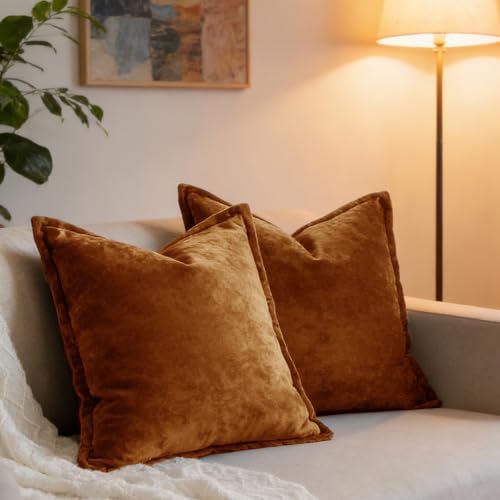
✅ 【 Luxurious Fabric 】- Euro pillow covers are made from sumptuously soft velvet materials, ensuring a touch of opulence with every embrace.Sink into the plushness and experience unparalleled comfort as you unwind on your sofa or bed.

EURO SHAM: (1) Pillow Cover (27"x27"). Insert not included.
How to Style Shams on Your Bed
Once positioned, shams turn your bed from functional surface into a carefully arranged center of attention. Place shams in front of sleeping pillows so their false front fabric remains visible, matching or complementing your duvet cover for a cohesive overall look.
Layering Techniques
For fuller dimension, stack shams atop flat sleeping pillows with cuffs pointed outward. Alternatively, lean sleeping pillows against the headboard and position Euro shams (26 x 26 inches) behind them. This establishes a larger-to-smaller gradient: Euro shams anchor the rear, while standard shams (26 x 20 inches), queen (30 x 20), or king (36 x 20) occupy middle positions.
Practical Considerations
During sleep, relocate shams behind pillows or remove them entirely; this preserves decorative fabric and eliminates discomfort from textured flange designs. Introduce variety through colorblocked shams and pillowcase sets, or deploy plush textures seasonally. Complete the arrangement with throw pillows for balanced visual weight.
Recommended Products
【Natural Linen Fabric】 Made of grade 30% linen and 70% cotton Natural linen cotton fabric makes it soft, comfortable, and breathable—good workmanship, tightly sewn. Color may be different in different light or on different screen

【Natural Linen Fabric】 Made of grade ramie linen and cotton Natural linen fabric makes it soft, comfortable, and breathable—good workmanship, tightly sewn

PACKAGE INCLUDES : Set of 1 hand block print lumbar pillow cover designed to fit most 14×36 inch lumbar pillows (insert not included). This decorative long lumbar pillow cover instantly refreshes your bedroom, living room, sofa, couch, bench, reading nook, or king bed with elegant artisan-inspired style.
What to Look for in Sham Materials
Whether you prioritize tactile comfort or low-maintenance durability, selecting sham materials requires balancing aesthetic intent with practical performance. You must distinguish sham vs. purely decorative coverlets: shams come designed with functional envelope or zipper closures to contain bed pillows, while accent pieces lack this utility.
Selecting sham materials requires balancing aesthetic intent with practical performance, distinguishing functional closures from purely decorative coverlets.
Fabric Considerations
You face immediate textile decisions. Linen, derived from flax fibers, delivers cool, breathable softness ideal for temperate climates. Cotton/polyester blends offer simplified maintenance with minimal wrinkling. For improved sustainability, organic cotton provides chemical-free cultivation with comparable hand-feel to conventional varieties.
Texture and Construction
Matelassé and heavier weaves generate visual depth and thermal retention, suiting seasonal rotation. However, verify that embellished front fabrics align with your tactile preferences; many textured decorative surfaces prove less comfortable for prolonged contact than smoother alternatives.
Practical Constraints
Unless you accept specialized handling, bypass silk and similar delicate materials. Assess whether your sham serves dual daytime display and nighttime function, or remains strictly ornamental.
Recommended Products
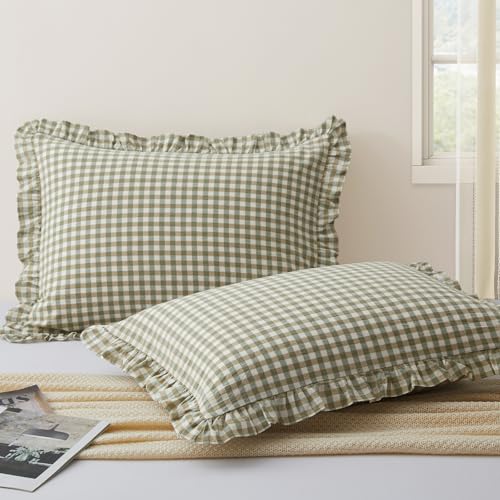
Soft and comfortable: Our pillowcases are made of cotton, with a comfortable and breathable fabric that feels like linen to the touch. Good stitching and exquisite craftsmanship can also reduce loose threads.

【100% Egyptian Cotton & Solid 600 Thread Count Construction】Our standard size waffle pillowcases are made of 100% Egyptian cotton with 600 thread count weaving, this pillowcase set delivers hotel-grade durability and silky smooth hand-feel. The high thread count density ensures the fabric is thick, breathable, naturally lustrous, and gentle on sensitive skin, hair, and facial skin.

Contains: Brand New 2 PCs Pillowcases 26" X 20", No Insert or Filler, Solid Colored
How to Wash and Care for Pillow Shams
Material selection determines longevity, but maintenance protocols ultimately preserve a sham’s structural integrity and surface appearance. You should check the care label first, since shams come in cotton, linen, polyester, or silk, each demanding specific washing and drying parameters. Most pillow shams feature a hidden zipper or overlapping fabric opening, facilitating easier removal than traditional pillowcases.
For excellent upkeep of your sham-covered pillows:
Plain solid-back styles tolerate regular laundry cycles. You’ll extend your sleeping accessories’ lifespan through consistent, fabric-appropriate maintenance.
Recommended Products

【Material】Crafted from 100% cotton, this duvet cover set is durable, breathable, cozy, and soft. Cotton is renowned for its hypoallergenic properties, making it suitable for a restful night's sleep.

Premium Quality Material: Made of 100% washed cotton, our Warm Moment Duvet Cover Set ensures a luxurious and comfortable sleeping experience, and the softer and breathable fabric will keep you cozy throughout the seasons

High-Quality Corduroy Material: These throw pillow covers are crafted from premium corduroy on both sides, the soft and thick corduroy ensures a plush and luxurious texture. The corduroy pillow covers are suitable for various home decorations, use your sofa pillow covers enhance the comfort and add an exquisite touch.
Leave a Reply