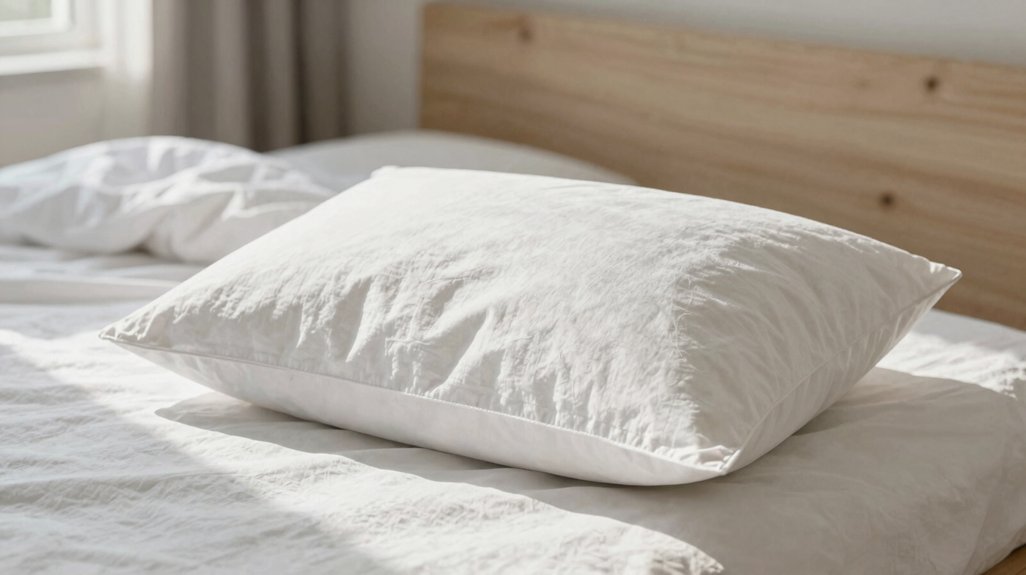
You encounter pillow shams whenever you dress a bed for presentation, though you may not recognize their distinct purpose.
These decorative covers measure 20 × 26 inches (standard), 20 × 36 inches (king), or 26 × 26 inches (Euro); each size serves specific layering protocols in hospitality and residential staging.
Unlike pillowcases, which prioritize breathable, sleeping-grade fabrics with open-end construction, shams employ envelope or zipper closures with tailored flanges, typically 1.5 to 3 inches wide.
Where Confusion Arises
You might assume shams belong beneath your head at night.
Most designers position them behind or aside sleeping pillows.
Their construction includes stiffer interfacing, ornamental edgings, and front patterns that withstand display compression but resist ergonomic support.
The false front phenomenon you create relies on this structural divergence.
Your bedding decisions hinge on clarifying this distinction.
What Is a Sham in Bedding?
Why does your carefully made bed still lack that polished, showroom finish? You’re likely missing a pillow sham, the decorative pillow covering that turns ordinary bedding into layered, intentional design.
A sham functions as a “false front,” engineered for visual impact rather than practical sleep support. You’ll position it in front of your sleeping pillows, creating dimensional depth through deliberate staging.
Construction Specifications
| Feature | Technical Detail |
|---|---|
| Front panel | Ornate, patterned, or textured fabric |
| Back panel | Simplified solid material |
| Closure system | Envelope overlap or hidden zipper |
| Standard sham | 26″ × 20″ |
| King sham | 36″ × 20″ |
| Euro sham | 26″ × 26″ |
The hidden zipper, increasingly preferred over envelope closures, secures inserts while preserving smooth visual continuity. You’re investing in removability: shams detach for cleaning without disturbing core bedding components.
Recommended Products

ULTRA-SOFT FEEL: Experience OEKO-certified (24.HCN.19195) pillowcases with double-brushed fabric that's gentle on skin. These pillow cases provide quiet, static-free sleep with soft and plush touch, offering both safety and cozy comfort
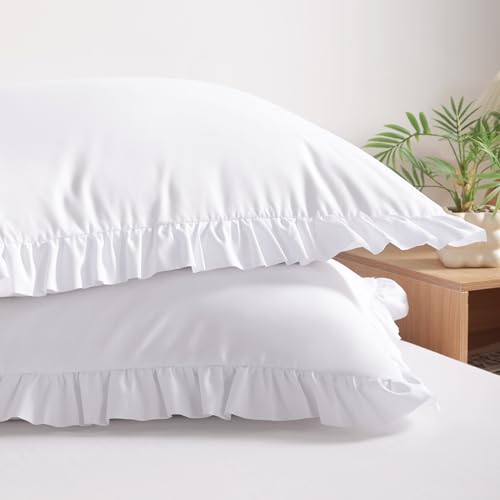
DECORATIVE RUFFLED EDGE: Soft ruffled trim adds texture and dimension for an easy bedding refresh. The versatile design complements farmhouse, romantic, and modern bedroom decor.

【100% Egyptian Cotton & Solid 600 Thread Count Construction】Our standard size waffle pillowcases are made of 100% Egyptian cotton with 600 thread count weaving, this pillowcase set delivers hotel-grade durability and silky smooth hand-feel. The high thread count density ensures the fabric is thick, breathable, naturally lustrous, and gentle on sensitive skin, hair, and facial skin.
Pillow Sham vs. Pillowcase: What’s the Real Difference?
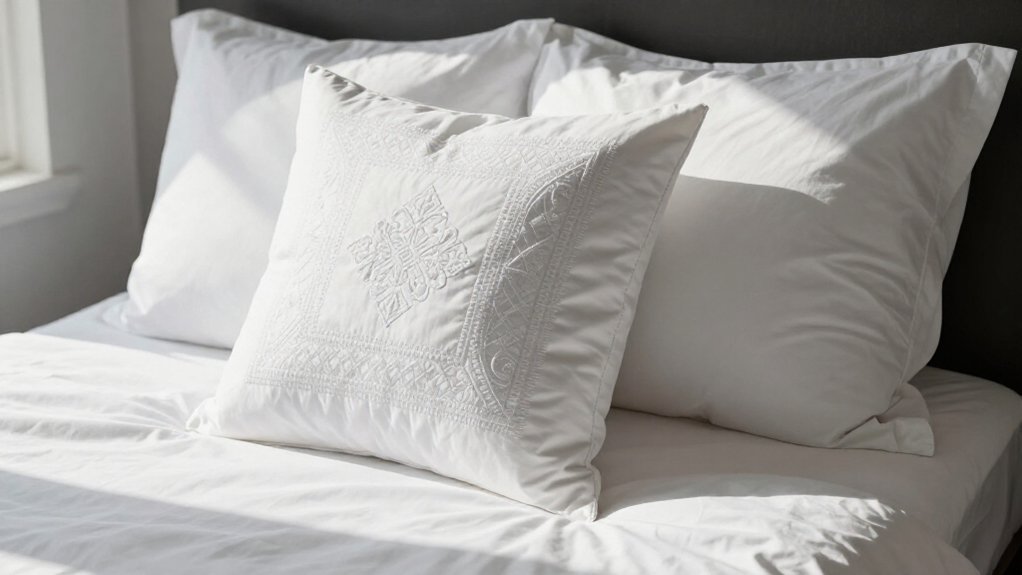
Now that you understand what constitutes a pillow sham, you’ll need to distinguish it from its functional counterpart: the pillowcase.
Core Functionality
A pillowcase serves hygiene and comfort, protecting your sleeping pillow from dirt and dust with a simple open-sided design. A pillow sham delivers decoration, creating a polished false front for your bedscape.
Construction Differences
| Feature | Pillowcase | Pillow Sham |
|---|---|---|
| Front/Back | Identical | Decorative front, plain back |
| Closure | Open side | Overlap or hidden zipper at back |
| Purpose | Protection | Presentation |
Sizing Specifications
Pillow shams align with standard formats: Standard (26″ × 20″), King (36″ × 20″), and Euro (26″ × 26″). Pillowcases match your actual sleeping pillow dimensions.
Styling Application
You’ll place pillowcases on sleeping pillows, then position shams in front for display. Remove shams nightly to preserve their decorative condition.
Recommended Products

【PACKAGE INCLUDE】2Pcs King zipper pillow covers 20 by 36 inches (pillows are not included). This is a great extra option to match with our microfiber sheets (asin:Boc1fhc89b) or your own regular bedding. It's really a great bedding that you can use in any season. We have many colors to choose from. You can find the right ones to decorate

Buttery Soft Materials: The front of our pillowcases is crafted from fluffy synthetic rabbit fur that has been OEKO-TEX certified. This certification guarantees that the material is hypoallergenic and environmentally friendly. The reverse side is made of soft velvet, delivering a sumptuously luxurious feel. The faux fur is thick, shaggy, and plush, offering a delightfully warm and cozy touch.
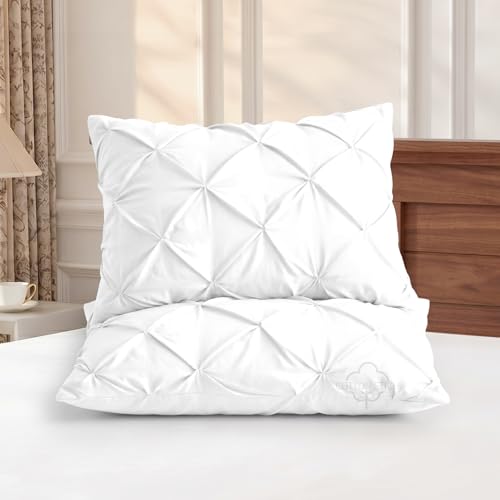
Smooth & Breathable Cotton – Made from premium Smooth & Breathable Cotton for an ultra-soft, breathable, and comfortable sleeping experience.
Can You Actually Sleep on a Pillow Sham?
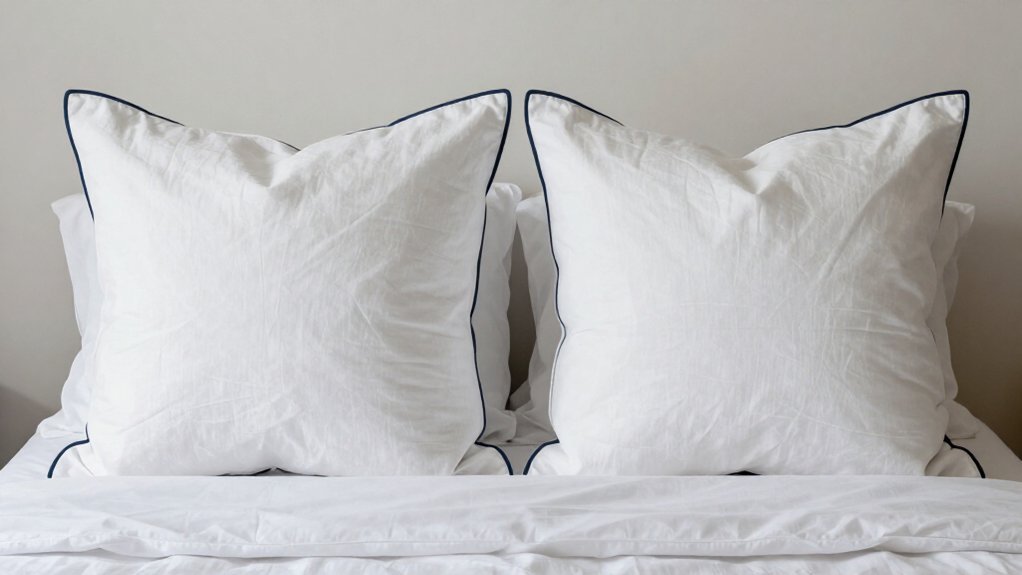
You can technically sleep on a pillow sham, though its primary purpose differs fundamentally from that of a standard pillowcase: shams prioritize decorative layering and aesthetic cohesion over sleep functionality, while pillowcases optimize for nightly tactile comfort.
Comfort considerations become paramount when evaluating this practice, as many shams feature textured weaves, embroidered embellishments, or flanged edges that create pressure points, bunching, and thermal inconsistency against facial skin. For ideal sleep hygiene and visual presentation, you’ll typically position shams behind functional sleeping pillows or reserve them exclusively for daytime décor, selecting down-alternative inserts with washable inner covers to maintain structural integrity without direct contact.
Recommended Products

【Timeless Boucle Texture】 Inspired by mid-century modern design, our Boucle pillow covers feature a trendy yet timeless loop texture that adds sophistication and character to all room.

QUALITY MATERIAL: The pillow cover is composed of a soft and comfy corduroy which is a kind of polyester fabric, features a cute and elegant boho stripe design. Our pillow covers are of good workmanship, they are tightly sewn without loose threads.

Oversized for Bed Styling: Measuring 26×26 inches, these large euro sham pillow covers are specially designed for bed decoration. Perfect for layering with other pillows, they add fullness and dimension to your headboard area, creating a luxurious hotel-style bedroom look.
Primary Purpose Differences
You’ll notice shams feature elaborate fronts, matelassé textures, flanges, or embroidery that give visual hierarchy in bedding arrangements. Standard pillowcases prioritize breathability and smoothness against skin. Shams typically employ overlap closures or concealed zippers on plain backs, yet the ornamental front remains structurally unsuited for sustained contact.
Your practical workflow involves displaying shams during daylight hours, then repositioning them behind sleeping pillows or removing them entirely. This protocol preserves both aesthetic integrity and sleep hygiene, minimizing soiling of decorative elements while maintaining the assembled ensemble’s intended visual impact.
Comfort Considerations
Sleeping on a sham presents distinct tactile variables that differentiate the experience from standard pillowcase use. You can technically rest on pillow shams, though you’ll encounter decorative textures or flanges that feel bulky against your face. Most sham pillows feature a decorative front with a plain fabric back, so you’ll find the reverse side offers marginally superior comfort.
Many users position shams behind sleeping pillows for added loft during lounging. However, ideal maintenance protocols suggest they’re removed from the bed at night. Consider these comfort factors:
- Texture differential: Decorative fronts create facial friction
- Dimensional instability: Flanges and piping disrupt cervical alignment
- Thermal retention: Layered constructions trap excess heat
- Maintenance burden: Reduced wash frequency versus standard pillowcases
For sustained comfort, you’ll want dedicated sleeping pillowcases rather than relying on sham construction.
Sham Sizes Decoded: Standard, King, and Euro
Since pillow shams serve both decorative and functional purposes, selecting the correct size proves critical for achieving a polished, cohesive bedding ensemble. You will encounter three primary categories: Standard pillow sham, King Shams, and Euro Shams, each engineered for specific pillow sizes.
Your Standard pillow sham measures 26 x 20 inches, accommodating standard rectangular inserts. King Shams extend to 36 x 20 inches, delivering proportional width for king pillows with a slightly fuller aesthetic. Euro Shams present a 26 x 26-inch square configuration, purpose-built for European-style cushions.
You need to match sham nomenclature to pillow category: standard-to-standard, king-to-king, Euro-to-Euro. Most constructions incorporate rear openings, envelope overlaps, or concealed zippers to maintain front-facing presentation while securing inserts. Precision in dimensional alignment ensures both visual coherence and functional performance across your bedding arrangement.
Recommended Products

Good Material: The pillow shams are made of 100% microfiber which is soft, lightweight to make you sleep easily
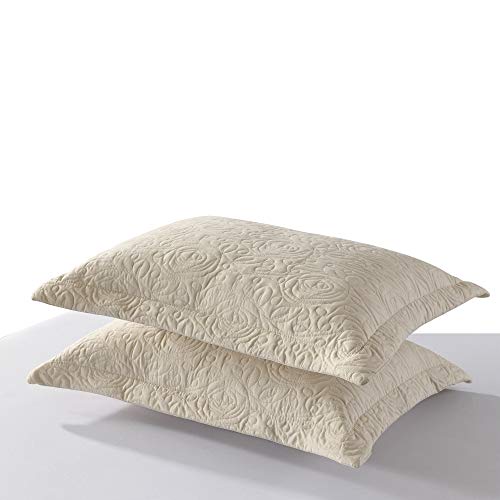
Material: front and back 100% polyester;filling 50% cotton, 47% polyester and 3% Nylon.Excellent performance: no skin irritation.

Soft and comfortable: Our pillowcases are made of ultra-fine fibers, with comfortable and breathable fabric that is soft and skin friendly. Good stitching and exquisite craftsmanship can also reduce loose threads.
Bed Sham or Euro Sham: Which Type Fits Your Bed?
You’re weighing whether bed shams or Euro shams better suit your setup, so you’ll need to match each option to your pillow dimensions and layering goals. Bed Sham Basics cover rectangular sleeping pillows, typically 26″ × 20″ (standard) or 36″ × 20″ (king), positioned in front of sleeping pillows for a polished, finished appearance. Euro Sham Features accommodate square Euro pillows, most commonly 26″ × 26″, serving as the back decorative layer to introduce height, structural depth, and that stacked silhouette against your headboard.
Recommended Products

Soft Brushed Microfiber: These pillow shams are made from smooth brushed microfiber polyester for a comfortable feel and an easy update to everyday bedding.

Exquisite Waffle Weave Design: The delicate waffle weave textured patternan elegant, three-dimensional look. With its exquisite design, breathable fabric, and comfortable hand feel, it creates a relaxing and restful atmosphere. and skin-friendly.

SOFT COTTON QUILT SET: Crafted from 100% cotton with breathable fibers and filled with an 80% cotton and 20% polyester blend for lightweight warmth, softness, and durability
Bed Sham Basics
At their core, bed shams and Euro shams serve distinct structural purposes in layered bedding arrangements: understanding their dimensional and functional differences ensures proper selection for your specific pillow inventory.
Bed Sham Specifications
You identify bed shams by their rectangular construction, designed for decorative pillows with length exceeding height. Standard Shams measure 26 x 20 inches, while Queen and King variants scale to 30 x 20 and 36 x 20 respectively.
Each pillow sham features a back opening, either an envelope closure or concealed zipper, facilitating insert placement and removal.
Functional Application
You use these shams to change sleeping pillows into daytime decorative elements. The sham covers your standard pillow, creating dimensional layering while hiding utilitarian bedding beneath.
Selection Criteria
Match your sham to insert dimensions precisely:
- Measure your pillow’s length and width
- Verify sham dimensions correspond exactly
- Select closure type based on accessibility preference
- Coordinate fabric weight with intended visual density
Euro Sham Features
Three distinct measurements define the Euro sham’s square construction. 26 × 26 inches serves as the foundational dimension, though boutique manufacturers occasionally scale to 28 × 28 or 32 × 32 inches for oversized applications. You’ll recognize these shams measure 26 × 26 as the industry standard for European square pillows.
Unlike rectangular bed shams, this decorative pillow sham creates vertical depth when layered behind sleeping pillows. Its square geometry provides complete pillow coverage and structured height against headboard surfaces.
Construction typically features ornate fronts with solid-fabric back panels, closed via envelope overlap or concealed zipper mechanisms. You select a Euro sham when pursuing dimensional layering, whereas you choose standard/king shams for horizontal, tailored arrangements. Both configurations prioritize aesthetic cohesion through matched fabrication and precise dimensional scaling.
Where Shams Belong in Your Bedding Layers
Beneath the duvet cover and atop your fitted sheet, shams occupy a specific stratum in the vertical hierarchy of bedding components. You position your pillow shams in front of regular sleeping pillows so their decorative “false front” displays when you view the bed. Bed shams are typically moved behind sleeping pillows or removed entirely during sleep to prevent soiling and eliminate bulk from the flange.
Shams occupy a specific stratum in the vertical hierarchy of bedding, positioned in front of sleeping pillows so their decorative false front displays when you view the bed.
Shams come in specific dimensions for proper layering: standard (26″×20″), king (36″×20″), and Euro (26″×26″). You create structure by placing sleeping pillows flat against the mattress, Euro shams behind, and standard/king shams in front for graduated height.
For ideal placement, follow this sequence:
- Position sleeping pillows against the headboard or mattress surface
- Layer Euro shams (26″×26″) behind standard shams for depth
- Place standard or king shams in front as the visible decorative layer
- Remove or reposition shams behind functional pillows before sleep
Shams function as daytime alternatives to throw pillows while remaining secondary to pillowcases used for actual sleeping.
Recommended Products

【Premium Natural Material】This standard pillow covers made by 100% cotton.It has been pre-washed with water and dried at high temperature,very breathable and has excellent moisture absorption and won't irritate your skin.

Soft Brushed Microfiber: These pillow shams are made from smooth brushed microfiber polyester for a comfortable feel and an easy update to everyday bedding.

WHAT’S INCLUDED: Ruffle pillow cases (20" × 26") 2 pack, designed to fit standard-size pillows. Perfect for refreshing your bedding with a lovely, charming atmosphere, and easy to mix and match with most bedroom décor styles
Do You Need a Sham? A Buyer’s Guide
You don’t technically need a sham for comfort, yet you’ll likely want one for a cohesive, layered look that improves your bedding ensemble. When selecting shams, you’re balancing two core considerations: functional versus decorative intent (sleeping support versus visual composition) and sizing and fit (standard 26″×20″, king 36″×20″, or Euro 26″×26″ square configurations).
You’ll match your sham dimensions precisely to your insert specifications, ensuring the cover maintains structural integrity without excess fabric or tension stress.
Recommended Products

Exquisite Waffle Weave Design: Classic yet stylish waffle weave design features three-dimensional, puffy and elegant appearance, brings casual sophistication and create a soothing retreat. Available in various colors, these pillow shams perfectly complement any home décor. Just decorate your comfortable pillows with our waffle weave pillowcase covers

HIGH QUALITY MATERIAL – 100% polyester shaggy microfiber plush on the front and reverse to ultra soft crystal velvet mink. Add a touch of graceful color to your room. Resistance to fading, shedding, wrinkles and pilling, also offers the best warmth, comfort and breathability. We have the whole plush shaggy duvet cover set and single quilt cover sold separately from our store.

PRODUCT DIMENSION : 2 pieces pillow covers, no insert. King size: 20"x 36".
Functional Versus Decorative
Your actual requirement for shams depends entirely on operational context rather than sleep necessity. A sham is a decorative pillow covering, not a utilitarian sleep surface like standard pillowcases. You don’t technically need one to rest; the decorative flange and textured fabric often feel bulky against your face during sleep.
Daytime Versus Nighttime Use
Most shams serve a decorative function during waking hours. You place them over sleeping pillows for visual cohesion, then remove or reposition them at night. This dual-purpose workflow separates aesthetic presentation from ergonomic comfort.
Selection Criteria
Consider these operational factors:
- Match your sham to pillow dimensions: Standard Sham measures 26″×20″, king spans 36″×20″, Euro spans 26″×26″
- Select envelope or hidden zipper closures for efficient removal
- Prioritize washable fabrics for maintenance cycles
- Reserve decorative textures for display, not contact
Your purchase decision hinges on styling priorities, not sleep requirements.
Sizing and Fit
Since shams lack universal sizing standards across manufacturers, selecting dimensionally compatible components requires precise measurement verification rather than assumption-based purchasing.
Standard Sham Dimensions & Compatibility
Pillow shams follow insert-based nomenclature: Standard size measures approximately 26″ × 20″, King spans ~36″ × 20″, and Euro shams present a square 26″ × 26″ profile. A properly fitted sham yields a tailored appearance. Conversely, sizing upward toward King/Queen ranges produces voluminous, relaxed aesthetics when stuffed with smaller fills.
Closure Mechanisms & Functional Placement
Most constructions employ envelope closures or concealed zippers, maintaining smooth decorative facades while securing inserts. Remember, pillow shams overlay sleeping pillows or standalone fills positioned anterior to functional bedding during display arrangements.
Do not conflate shams with pillowcases: shams feature ornamented fronts with solid backs, whereas pillowcases prioritize tactile comfort for nightly use.
Verification Protocol
Measure your existing inserts before purchasing. Manufacturer tolerances vary; nominal “Standard” designations may deviate by 1–2 inches across brands.
How to Style Shams for a Polished, Layered Look
Whether you’re revitalizing a primary suite or staging a guest room, understanding sham placement turns utilitarian bedding into a deliberate design choice. Pillow shams are designed primarily for display, so you position them at the front of the bed with decorative faces visible and functional sleeping pillows concealed behind.
Follow this scaled approach for professional results:
- Place standard or king shams directly in front of sleeping pillows, maintaining crisp cuff orientation toward the footboard.
- Layer Euro shams (26″ × 26″) behind smaller standard/king shams (26″ × 20″ or 36″ × 20″) to establish proportional depth.
- Coordinate sham palettes with duvet or coverlet selections, reversing to plain-backed sides where design cohesion requires.
- Install Euro shams as headboard-backdrop arrangements for daytime presentation, removing them before sleep to preserve fabric integrity.
Recommended Products

【Natural Linen Fabric】 Made of grade 30% linen and 70% cotton Natural linen cotton fabric makes it soft, comfortable, and breathable—good workmanship, tightly sewn. Color may be different in different light or on different screen

Bamboo Fiber Comfort: Bamboo fiber offers ultra-soft, breathable, and skin-friendly for restful time. Elevate everyday comfort with cloud-like softness.

SOFT COTTON FABRIC FOR EVERYDAY COMFORT: Crafted from 100% cotton, these European shams deliver a smooth, lightweight feel designed for breathable comfort and decorative layering.
Sham Fabrics That Hold Their Shape (And How to Clean Them)
• Reshape promptly post-wash; air-dry flat or tumble-low
, Clean as needed; decorative rotation minimizes wear
Follow fabric-care labels precisely. You’ll prevent sagging, minimize wrinkling, and extend service life through proper handling.
Recommended Products

【Soft Material】Top quality microfiber fabric is breathable. Good sewing stitch and exquisite workmanship reduce loose thread.

Pretty ivory ruffle pillow sham with eyelet embroidery.

Package includes 2 PCs throw pillow cover. No pillow INSERT.
Why Your Shams Look Flat (And How to Fix Them)
3. Heavy flanges unsupported: Decorative edge trim collapses without dense, structured fill behind it.
4. Improper closure technique: Envelope overlaps or misaligned zippers pull fabric unevenly.
To restore dimension, redistribute or upgrade to higher-loft bed pillows, then position shams stacked over sleeping inserts for structural support. When shams are used as intended, with matched fills and centered placement, they maintain the intended architectural presence.
Recommended Products

✔ 100% Natural Cotton Pillow Shams – 600 Thread Count : Crafted from premium 600 thread count Natural cotton, these pillow shams offer a soft, smooth finish and reliable everyday comfort. Designed for customers seeking high-quality, natural bedding essentials.
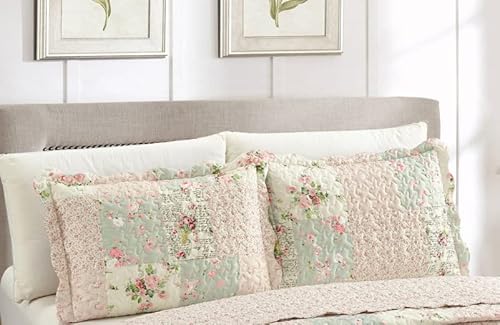
Unique Design: Traditional patchwork in modern shades of rose and sage, with vermicelli quilting, classic, exquisite and unique; reverse to a matching pattern of rosebuds; made to enhance décor
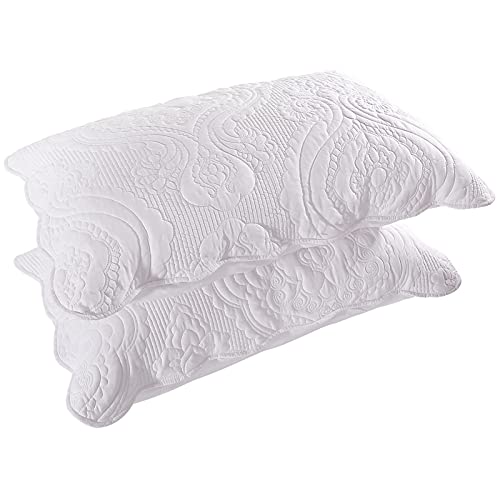
WHAT YOU CAN GET: Includes 2 white standrad size pillowcases (20"x26") with envelope closure, (No pillow inner); We are very confident in the quality of our quilted pillow shams
Leave a Reply