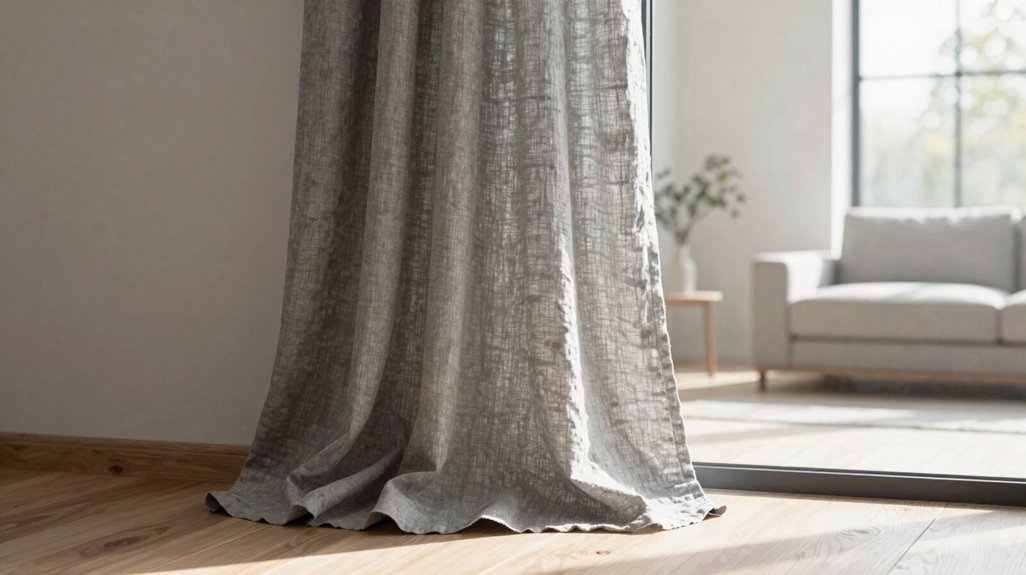
You encounter drapes when your project demands maximum opacity, acoustic dampening, and thermal performance.
These window treatments typically employ face fabrics weighing 12–16 oz/yd², velvet, silk, or heavyweight linen, paired with interlining (cotton flannel, 4–6 oz/yd²) and blackout lining (3-pass acrylic foam, 100% light blockage).
Unlike standard curtains (4–8 oz/yd², unlined), drapes require mounting hardware rated for 15–25 lbs per linear foot: traverse rods, ceiling-mounted tracks, or decorative poles with 1⅜-inch diameter minimum.
Floor-length construction, pooling 1–4 inches or breaking at ½ inch above flooring, eliminates perimeter light leakage.
You will need to evaluate whether these performance characteristics justify the 3–5x cost premium over ready-made alternatives.
The decision hinges on measurable outcomes, not aesthetics alone.
Curtains vs. Drapes: Which Window Treatment Fits Your Room
Conversely, curtains employ lighter fabrics such as cotton, linen, or sheer synthetics. They terminate at the windowsill, facilitating privacy preservation while admitting diffuse natural illumination. Installation requirements differ markedly; drapes demand reinforced rods capable of bearing significant load, whereas curtains accommodate tension mechanisms for simplified deployment.
Recommended Products
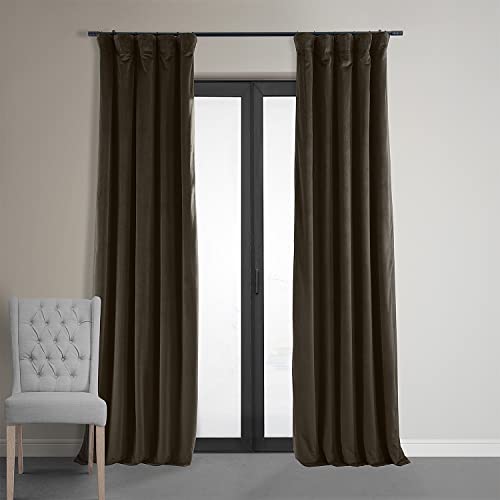
How To Hang: Our header allows you to hang 3 ways. Curtain panels can be sheered on a rod using the pocket, Hang with back tabs or attached to rings using the belt and drapery pins. Pole Pocket will accommodate a pole up to 1.5 inches, Hooks Not Included.
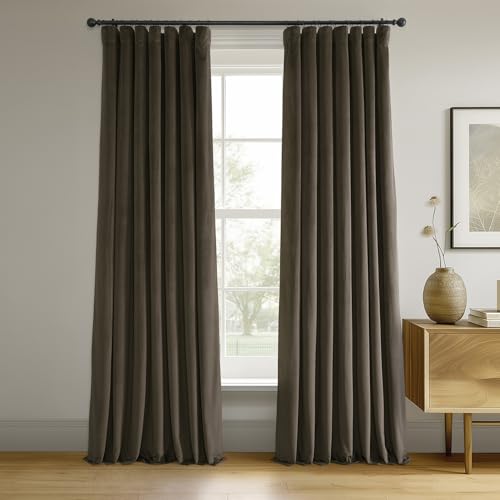
How To Hang: Our header allows you to hang 3 ways. Curtain panels can be sheered on a rod using the pocket, Hang with back tabs or attached to rings using the belt and drapery pins. Pole Pocket will accommodate a pole up to 1.5 inches, Hooks Not Included.

Ready Made: Package includes one pair of 52" wide x 90" long luxury blackout 100% polyester, Lining: 100% polyester. curtain pair
Why Drape Fabric Feels Heavier and More Formal
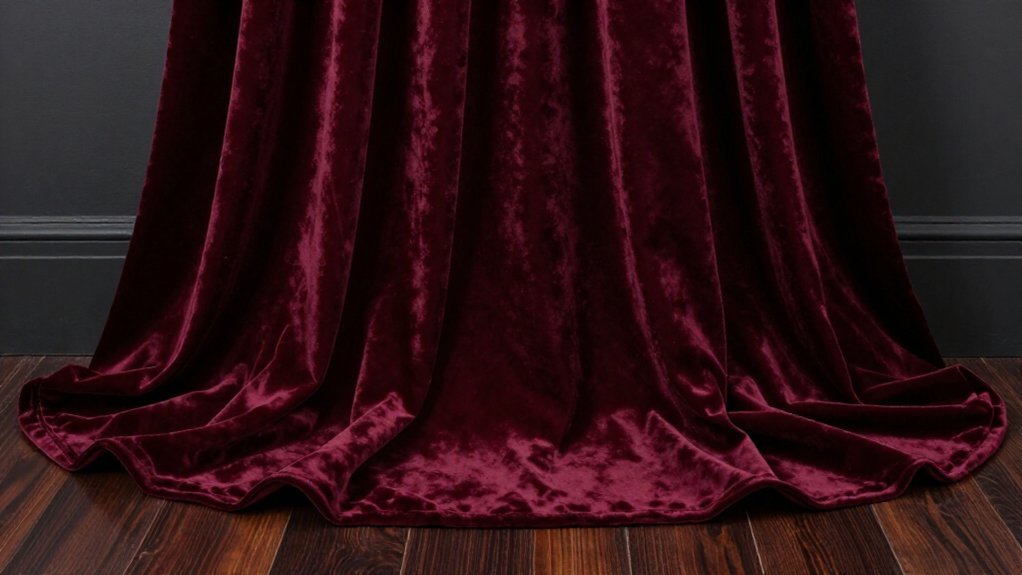
You’ll notice immediately that drape fabric carries substantially more heft than standard curtain material, typically weighing 12–16 ounces per square yard versus 3–6 ounces for unlined sheers. This weight differential stems from three core construction elements: base fabric density (velvet at 400–600 GSM, silk dupioni at 80–120 GSM), interlining systems (flannel, bump cloth, or thermal foam adding 30–50% mass), and functional backings (blackout liners at 2–3 ply, 70–100% light block).
The cumulative effect changes your spatial perception, as floor-length panels with 2–4 inch puddles introduce vertical mass that anchors architectural proportions and signals formality through deliberate, structured drape rather than incidental flutter.
Recommended Products

100% Physical Blackout: 100% total light blocking is achieved through our heavy double-layer fabric. Are you struggling to sleep during bright hours due to piercing sun glare or blinding streetlights? Our dual-panel system utilizes two layers of high-density 230GSM woven polyester with a built-in black lining to shut out all incoming light. Imagine transforming your sun-drenched room into a serene midnight sanctuary, allowing night-shift workers and infants to enjoy deep rest.
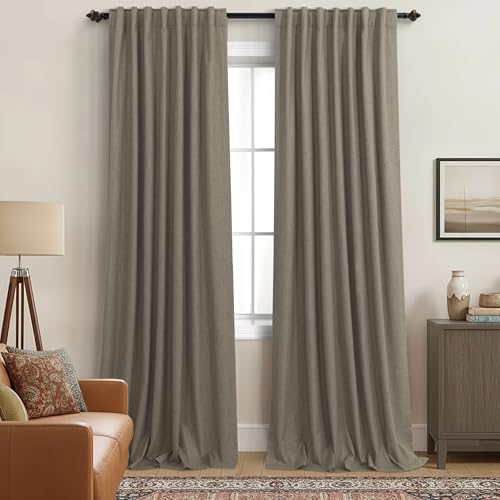
100% BLACKOUT: These linen textured curtain panels block out 100% complete sunlight and UV rays,turning day into night.Help on you and your kids sleeping.

Ready Made: 2 panels per package. Each Classic Lined Curtain measures 62" wide x 95" long (Total width is 124"). 2.7-inch rod pockets are recommended with no greater than a 1.7-inch rod for maximum movement. Create pleats easily, adding decorative style.
Fabric Weight Differences
The weight differential between drapes and standard curtains stems primarily from deliberate textile selection: velvet, silk, brocade, and wool-blend fabrics dominate drape construction, each exhibiting substantially higher grams-per-square-meter (GSM) ratings than the cotton voile, polyester sheers, or linen gauzes typical of lightweight window treatments.
Fabric Weight Fundamentals
You’ll immediately notice the heft when handling drapes. Heavier fabrics, often 300–600 GSM, deliver substantial body and structured hangs that Sheer Curtains, typically 50–150 GSM, cannot achieve. Thicker fabrics resist billowing, maintaining precise positioning.
Construction Enhancements
Lined fabrics amplify this effect. Standard drapes incorporate back linings, interlinings, or blackout layers, adding 100–200 GSM per layer. This multi-ply construction increases thermal insulation, light attenuation, and acoustic dampening.
Functional Outcomes
Your drapes sit flush against windows, minimizing light leakage through weight-induced tension. The density blocks 85–99% of incoming illumination versus 10–40% for unlined sheers, changing ambient control through mass alone.
Formal Room Impact
When you enter a formally appointed room, your eye registers the gravitational pull of floor-length textiles before you’ve consciously identified them. Drapes command this attention through material density and architectural proportion.
Structural Components of Formal Impact
- Heavier base fabrics: Velvet, satin, and brocade hang with inherent body, resisting the billowing movement of lighter sheers
- Lined construction: Back linings block light penetration, eliminate transparency, and add measurable weight, typically 20-40% additional fabric mass
- Floor-length specification: Standard 84-inch to 120-inch drops create vertical emphasis; “puddle” allowances of 2-8 inches amplify gravitational presence
The composite effect: reduced perimeter gaps, polished sight lines, and intentional opacity. You perceive substance before detail, structure before decoration. Drapes thus function as architectural elements rather than mere window coverings, establishing hierarchical visual weight that signals carefully selected, upscale interior environments.
Blackout Drapes: How Liners Control Light and Privacy
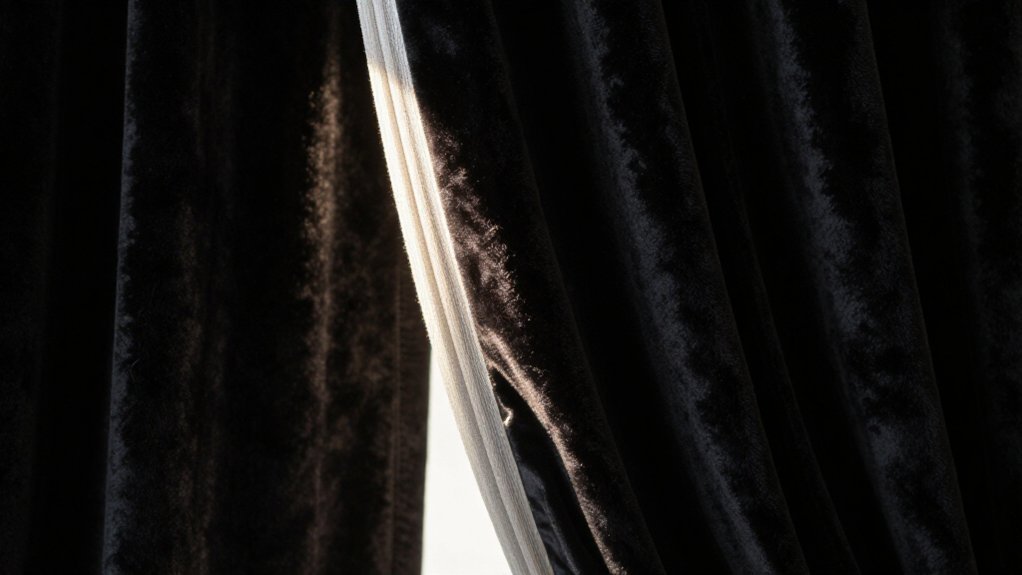
For superior light management, blackout drapes rely on a multi-layered construction that distinguishes them from standard curtain panels. Unlike lighter drapes and curtains, these window treatments incorporate a dedicated liner specifically engineered for light control and privacy enhancement.
Key Construction Elements
The blackout liner serves as the critical barrier between you and external illumination. You’ll find this specialized layer bonded to heavier face fabrics, creating a composite system that eliminates the pinprick light penetration common in unlined alternatives. Your privacy increases substantially because the liner blocks silhouettes and shadows from passing through the material.
Performance Specifications
Blackout drapes typically achieve 95-100% light blockage when properly specified. You’re selecting from thermal-lined, foam-backed, or triple-weave constructions, each delivering distinct thermal and acoustic properties alongside primary light-blocking functions. Installation requires reinforced hardware; you’ll need sturdy rods capable of supporting 15-25% additional weight compared to standard panels.
Recommended Products

3LayerLock thermal insulation technology, hotel grade foamback drapery

3LayerLock thermal insulation technology, hotel grade foamback drapery

3LayerLock thermal insulation technology, hotel grade foamback drapery
Where Floor-Length Drapes Look Best
How do you determine the best placement for floor-length drapes to maximize their visual and functional impact? You start by identifying spaces where vertical extension raises the architectural envelope: rooms with taller windows or higher ceilings, such as the living room, formal dining room, or primary bedroom.
Identify spaces where vertical extension raises the architectural envelope: rooms with taller windows or higher ceilings.
Optimal Placement Criteria
- Puddling technique: You install floor-length drapes to pool slightly at the base. This creates a fuller, more opulent vertical line, particularly with heavy, lined fabric such as velvet or silk blends.
- Wide openings: You use these window treatments to conceal gaps between panels and frame double windows or bay configurations with tailored coordination.
- Performance zones: You deploy longer, heavier drapery in high-light or draft-prone areas. The increased material density reduces light leakage and improves thermal insulation versus lighter alternatives.
- Precision requirements: You maintain consistent rod height and exact length specification. Drapes must not terminate above the floor or drag excessively for your room’s style and furniture layout.
Rods and Installation for Heavy Drapes
Since heavy drapes impose substantial tensile loads on their support systems, you’ll need to upgrade from standard hardware to engineered solutions rated for weight capacity. Your lined fabric selections demand curtain rods engineered beyond standard specifications.
Critical Hardware Requirements
You’ll avoid tension-rod configurations entirely; they’re incompatible with substantial drapery. Instead, select reinforced brackets with appropriate wall anchors. Consider these factors:
- Verify rod diameter accommodates ring or grommet spacing without deflection
- Install center supports every 30–36 inches to prevent midspan sagging
- Position rods 4–6 inches above window frames for best stack-back clearance
- Extend rods 8–12 inches beyond window width for full fabric reveal
- Specify wall-mounted versus ceiling-mounted brackets based on header configuration
Floor-length or puddled drapes require precise rod height calculations. You’ll measure fabric length from rod centerline, accounting for ring drop. Heavier curtains need enhanced fullness ratios, typically 2.5:1 to 3:1, ensuring proper window coverage without operational binding.
Recommended Products

Ceiling curtain track: metal heavy-duty curtain track, silent, smooth, anti-corrosion, will not bend and deform, can carry more weight, can be freely cut size, aluminum alloy material using high standard aluminum, smooth surface. If the ceiling is drywall, professional expansion plugs and extension screws are required.

[Package Contains]:The ceiling curtain track system includes 1x curtain track 9.8ft(3m), 26x track rollers,9x ceiling brackets, 2x end covers, 26x iron hooks, 9x drywall anchors, 9x screws.(Note: Clips are NOT included)
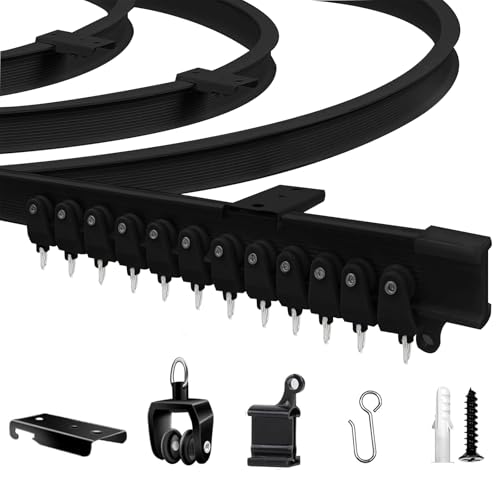
[Package Contains]:The ceiling curtain track system includes 1x curtain track 9.8ft(3m), 26x track rollers,9x ceiling brackets, 2x end covers, 26x iron hooks, 9x drywall anchors, 9x screws.(Note: Clips are NOT included)
Light, Noise, and Temperature: Do Drapes Actually Work?
You might wonder whether drapes deliver measurable performance benefits across light attenuation, acoustic dampening, and thermal resistance. The short answer: construction specifications, fabric weight measured in grams per square meter (gsm), and installation precision determine efficacy, with lined, heavyweight options achieving up to 99% light blockage and R-value improvements of 1.0–1.5.
Before examining each functional domain, consider how your priorities, window dimensions, and environmental stressors dictate best material selection and mounting configuration.
Recommended Products

【100% Blackout Effect】Joydeco blackout velvet curtains are made from three-layer soft fabric. And the solid shading layer boasts excellent light-blocking capabilities, ensuring that your room remains dark in strong sunlights or bright nights.

TIMELESS OPULENCE: Golden brown velvet adds a luxurious touch to your home. The flowing drape creates an elegant presence in your space, creating a grand yet welcoming setting where you can host guests, enjoy family gatherings, and enjoy the elegance of everyday living

LIGHT CONTROL – This lined curtain panel is considered a Blackout, blocking 100% of the light. The Thermal Insulated lining ensures complete privacy blocks out sunlight and reduces heat and noise.
Light Blocking Effectiveness
Why do drapes outperform standard curtains in light mitigation? Unlike sheer fabrics that compromise your amount of privacy, drapes deliver superior light blocking because they’re often lined with dense materials. You’ll find this construction eliminates the penetration issues common with lighter alternatives.
Consider these technical advantages drapes provide:
- Heavier base fabrics (velvet, silk) inherently reduce photon transmission
- Blackout liners block 95-99% of incoming daylight wavelengths
- Floor-length deployment minimizes perimeter light leakage
- Reduced gap architecture traps photons at the window interface
- Multi-layer construction outperforms single-panel systems
Your sleep quality improves measurably when early-morning solar radiation cannot penetrate. Blackout drapes specifically address circadian disruption by creating complete photic exclusion.
The thermal lining contributes secondary benefits, though noise reduction properties warrant separate examination.
Noise Reduction Capability
Although light mitigation often dominates discussions of drapery performance, acoustic dampening represents an equally measurable benefit that heavier window treatments provide.
How Drapery and Curtains Absorb Sound
When you cover windows with heavier thicker fabrics, you’re installing a porous absorptive barrier. Unlike lightweight sheers, substantial drapery panels, particularly those with bonded or separate linings, convert acoustic energy into heat through frictional resistance within fiber matrices. You can open or close these assemblies to modulate exposure, though fully deployed configurations yield maximum attenuation.
Key Performance Factors
The efficacy spectrum depends on several variables:
- Fabric density (measured in grams per square meter)
- Lining configuration (single, double, or blackout-interlined)
- Peripheral sealing (overlap at sides, sill contact below)
You achieve best results through multilayer construction. A face fabric plus interlining plus blackout lining creates three distinct absorptive interfaces. This assembly doesn’t render a room anechoic, but you’ll notice measurable reduction in mid-to-high frequency transmission, traffic rumble, and HVAC drone.
Energy efficient specifications often correlate with acoustic performance, as both derive from mass and sealing integrity.
Temperature Insulation Benefits
Your drapes reduce solar heat gain coefficient (SHGC) values substantially when you deploy blackout-lined configurations during peak insolation periods. You minimize nocturnal heat loss through the same assembly by maintaining the closed position after sunset.
Critical Performance Factors:
- Thicker interlining materials increase R-value by 0.5–1.0 per layer
- Floor-length fabric panels eliminate sill-level thermal bridging
- Lined drapes reduce air infiltration by up to 25% versus unlined alternatives
- Proper width coverage (2.5–3.0× window width) ensures stack-back doesn’t expose glazing
- Continuous headrail mounting prevents convection loops at the lintel
You ensure efficiency through complete perimeter sealing.
Custom Drapes or Store-Bought Curtains: How to Decide
Several factors determine whether custom drapes or store-bought curtains suit your project, and understanding these variables upfront prevents costly missteps.
Understanding your project’s key variables upfront prevents costly missteps when choosing between custom drapes and store-bought curtains.
Fit and Precision
Custom drapes are fabricated to your window’s exact measurements, accommodating unusual shapes and floor-length “puddle” effects. Store-bought curtains arrive in preset sizes, typically 84″ or 54″ lengths, forcing compromises.
Light Control
If you’re selecting new window treatments to manage natural light, custom drapes offer heavier, often lined fabrics that reduce gaps and glare. Store-bought options tend toward lighter or sheer materials, making custom the better option for bedrooms requiring near-blackout conditions.
Installation Requirements
Heavier custom drapery demands sturdier rods; store-bought curtains may function with tension rods, though these prove inadequate for substantial installations.
Maintenance Considerations
Store-bought curtains typically withstand machine washing, while custom drapes often require professional cleaning protocols.
Recommended Products

Ready Made: 2 panels per package. Each classic linen blackout curtain measures 52" wide x 84" long (Total width is 104") when fully spread. Due to handmade craftsmanship, size may vary by 1". The unique design of grommet (1.6-inch inner diameter) creates farmhouse style for your house, which makes the curtains easy to install and slide.

STANDARD MADE: Curtains are sold per pair. Each pack contains 2 blackout functional curtain panels. Each panel measures 52" W x 84" L | Pair measures 104"W x 84"L. Thread trimmed and wrinkle free, each piece is constructed with 8 anti rust grommets which fit well up to 1 1/2 inches curtain rods for effortlessly installation and sliding

Anti-dust Curtains: Lab proven effective in filtering 62.5% of dust particles due to melt blown layer(mask raw material) added. Effectively prevent wildfire smoke allergenic pollen, pet hair and street dust from entering the room, isolating dangerous sources of respiratory diseases. Ideal for pet owners and allergy sufferers.
Leave a Reply