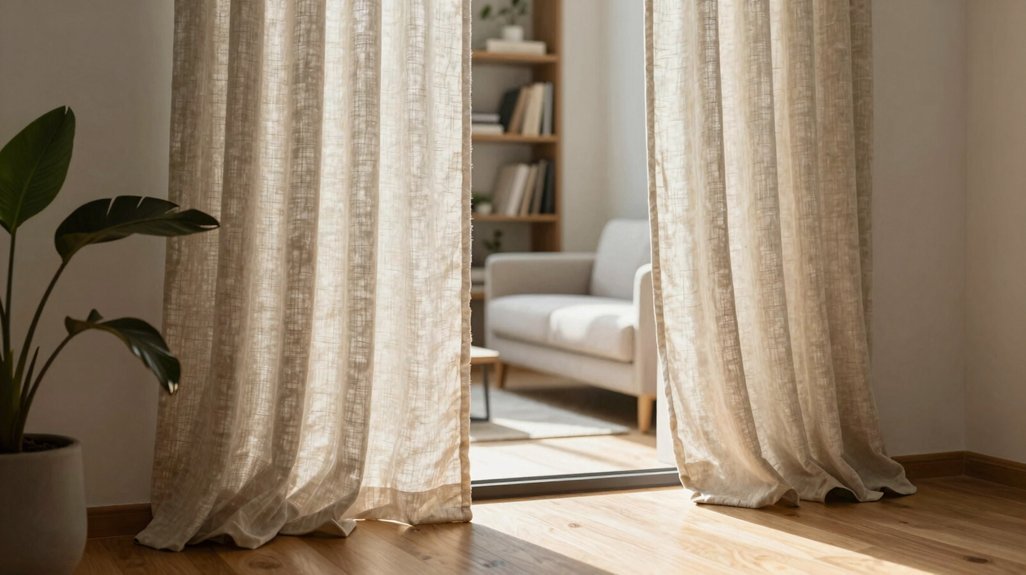
You stand before bare windows, uncertain where to begin.
Window treatments constitute a specialized category of interior architectural elements: blinds with their adjustable slat systems, shades employing continuous fabric mechanisms, shutters featuring fixed or operable louvers within rigid frames, and drapery suspended from traverse or decorative rods.
Each category delivers distinct performance metrics for light attenuation, thermal resistance, and acoustic dampening.
Your selection hinges on precise variables: aperture dimensions, solar orientation, and operational preferences.
The following sections break down technical specifications, mounting methodologies, and cost-benefit analyses to guide your specification process.
Blinds, Shades, Shutters, or Curtains: What’s the Difference?
Although the terminology surrounding window treatments often appears interchangeable in retail contexts, you’ll encounter four fundamentally distinct architectural categories: blinds, shades, shutters, and curtains/drapery.
Retail jargon may blur the lines, but four distinct architectural categories define every window treatment you’ll encounter.
You’ll distinguish blinds by their hard, separate slats; you tilt these horizontal or vertical components to modulate light control. Shades operate differently: you raise or lower continuous fabric material, including motorized Shades, for smoother aesthetic integration. Shutters present fixed louvers within solid frames; you hinge these architectural elements away from the window aperture. Curtains comprise fabric panels on rods, ranging from sheer decorative layers to heavier drapery constructions.
Your mounting methodology matters greatly. You’ll select inside mount applications for minimal projection or outside mount installations when recess depth proves insufficient.
This distinction between slats, continuous fabric, and built-in frame systems fundamentally determines your operational mechanics and visual outcome.
Recommended Products
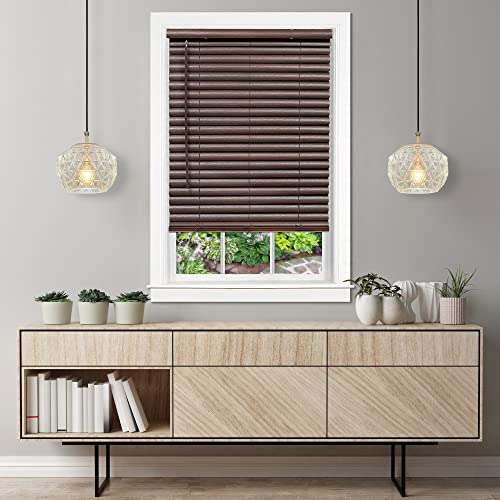
Room Darkening Cordless Vinyl Blinds: Reduce heat and help save on the electric bill while darkening your room with the Achim Home Decor CO GII Luna Cordless Room Darkening Blinds. Engineered for privacy, these vinyl blinds with no cords to get tangled are child and pet safe. Blinds will fit windows 3/8" (0.95 cm) smaller and 1/2" (1.27 cm) wider than stated size. Actual blind is 1/2 " (1.27 cm) narrower than stated size. Actual slat size is 2".

How to Choose Your Size: Measure your window's exact width. If your measurement exactly matches one of our sizes (e.g., 30" or 30 1/2"), choose that precise size. If your measurement falls between two sizes, always round DOWN to the nearest smaller size. For example: 30 7/8" wide → choose 30 1/2", 30 1/8" wide → choose 30"
Sheer to Blackout: Window Treatments by Light Control Level
Once you’ve selected your hardware category, slat configuration, and mounting methodology, you’re ready to evaluate how that treatment will perform across daylight conditions.
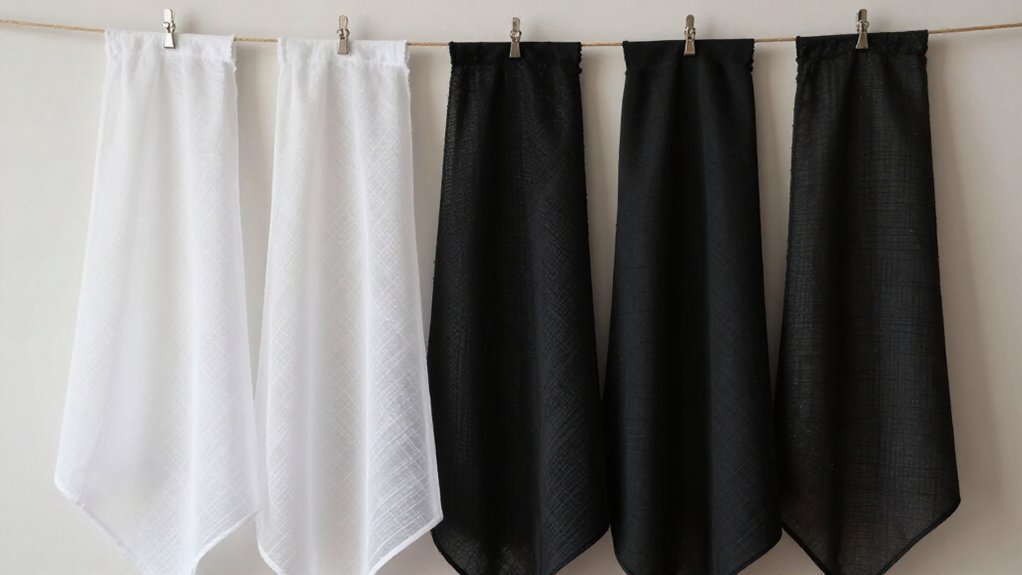
Window coverings made for light control span four tiers: sheer, light-filtering, room-darkening, and blackout. Sheer fabrics admit maximum daylight while obscuring direct sightlines. Light-filtering shades soften solar glare without eliminating ambient illumination.
For excellent control over both thermal transfer and luminance, cellular shades trap air within honeycomb structures. Blackout cellular shades ($265.99 USD) and blackout curtains ($359.99 USD) achieve near-total light elimination. Roller shades in light-filtering fabrics (from $145.99 USD) preserve daytime visibility through textures including Linen Beige and Jacquard White/Grey/Coffee.
Top Down Bottom configurations let you deploy dual-function systems: sheer or solar layers for filtered views, plus blackout deployment for complete privacy. Roman shades occupy intermediate positions, with lining upgrades shifting their performance across the spectrum.
Your selection hinges on reconciling light and privacy priorities against each space’s solar exposure patterns.
Recommended Products

Inside Mount ONLY. For better internal installation, a standard 3/8 inch deduction is made to the width for a proper INSIDE MOUNT fit. The actual blind size is 33 5/8" W x 64" H, perfect for window 34" W x 64" H. The unique spring rod can extend 1 inch in total, allow the blind to fit for window size W33.7-34.6 X H64".

Motorized Cellular Shades with Remote: Smart cellular blinds can regulate the incoming natural daylight and sunlight to control the indoor climate and save energy, by taking full advantage of the reflective and insulating properties, creating perfect atmosphere at any time of the day.

CORDLEES & FREE-STOP DESIGN: The cord-free design provides a clean, tangle-free look to the window and creates a safer environment for children and pets; The blinds will stay at whatever position you stop; The bottom aluminum rail is weighted and rigid so it hangs flat and prevents from blowing
Smart and Motorized Window Treatments: Features and Pricing
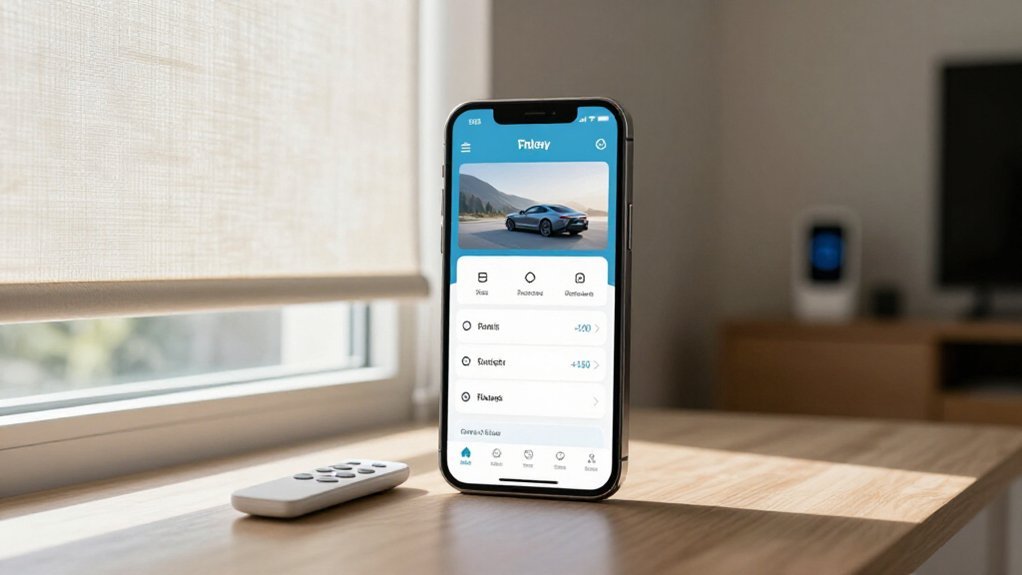
Three primary advantages distinguish motorized window treatments from manual alternatives: programmable automation, remote accessibility, and integration with centralized smart home architectures.
You’ll find motorized roller shades with light-filtering textures like Linen Beige, Jacquard White/Grey/Coffee, Pure White, and Sheer White starting at $145.99 USD. For superior heat/light management, Graywind’s motorized blackout curtain with track in Essential Fabric runs $359.99 USD.
Smart blinds through Graywind’s Motionblinds partnership connect to major smart home ecosystems. Custom window solutions include motorized arch cellular shades; these feature blackout colors such as White, Beige, Burlywood, Brown, Black, and Light Grey at $265.99 USD.
Motorized options particularly benefit awkward-to-reach windows, automating privacy and daylight control without physical intervention.
Recommended Products

【Top Down Bottom Up Cellular Shades】 Sunfree top down bottom up cellular blinds are tested for lifting and pulling down before they are delivered to the customer, ensuring that each shade can be pulled easily and smoothly. Three types of opening and closing are available to meet the needs for light, and privacy. The honeycomb shades are suitable for living rooms, bedrooms, and offices.

【Top Down Bottom Up Cellular Shades】 Sunfree top down bottom up cellular blinds are tested for lifting and pulling down before they are delivered to the customer, ensuring that each shade can be pulled easily and smoothly. Three types of opening and closing are available to meet the needs for light, and privacy. The honeycomb shades are suitable for living rooms, bedrooms, and offices.
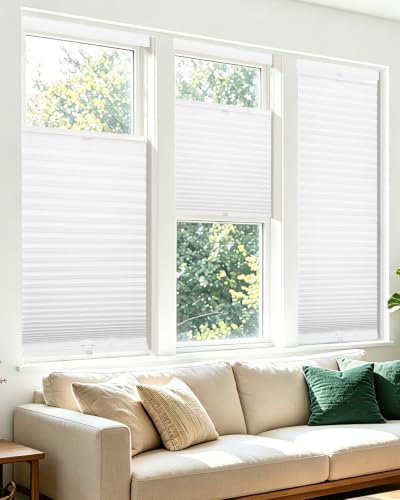
Measurement Instructions: For Inside mount, ensure a minimum 2 "window frame depth. The order width=Window Width (W)-0.2" ,Window Width (W ) should be the smaller value between top width (W1) and the bottom width (W2).Order length should match window length. For Outside Mount, order width and length 4-6 inches more than window dimensions
Which Window Treatment Fits Your Space?
Motorized systems solve accessibility challenges, but selecting the appropriate window treatment category demands analysis of your specific spatial constraints, light management priorities, and architectural variables.
Blinds and Shades: Core Distinctions
You choose blinds when you need tilting slats for precise glare and privacy control. You select shades, which are raised or lowered as fabric panels, for streamlined aesthetics.
For small windows or spaces above furniture, you mount Roman shades inside the window frame to maximize light shielding, though you’ll notice minor edge light leak.
Specialized Applications
You specify pull-down shades or motorized options for awkward-to-reach windows, ensuring fabric stays aligned without manual adjustment. For arched or angled windows, you order purpose-built cellular shades that conform to non-standard geometry.
Layering Strategies
You pair treatments for effective performance: keep a Roman shade open while deploying a solar layer for privacy, or install heavier fabrics with blackout tracks where you must block much light entirely. You hang decorative rods only when drapery supplements functional layers.
Recommended Products
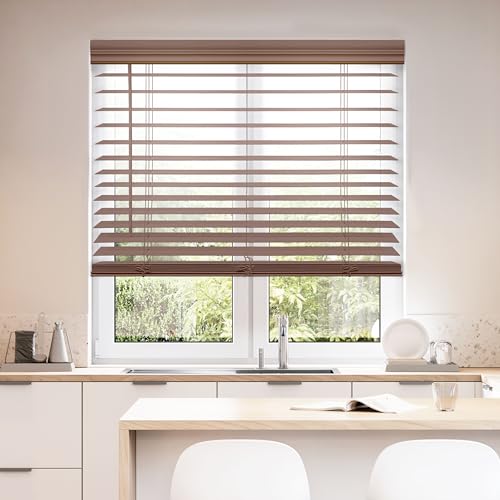
All blinds are manufactured with a standard 1/2" width deduction to allow for proper installation clearance. The actual blind width will always be 1/2" narrower than the selected size, regardless of whether you choose an inside or outside mount.

IMPORTANT! – This window blind is 18.5" wide to allow for mounting the blind inside a 19" wide window. Your blind will arrive to you exactly 18.5" wide. Our 2 Inch Faux Wood blinds are designed for a wide variety of window sizes and styles. Sizes stated within the product descriptions are listed by WIDTH then HEIGHT. See measuring instructions to ensure best fit.

【Fully Customizable Features】Our indoor shutters can be customized in size, panel count, frame type, louver size, and split tilt. Made in 4 weeks
How to Measure and Mount Your Window Treatments
The difference between a drapery installation that looks custom and one that looks improvised comes down to your measurements. Measure your window width and multiply by 1.5–3 for proper fabric fullness. For window treatment length, measure from the mount point to your finish point: floor-length delivers classic style, while sill-length suits smaller windows.
Mounting Methods
- Inside mount: Choose this for a clean look that highlights window trim; requires adequate frame depth.
- Outside mount: Mount higher and wider for enhanced light-blocking, extending approximately 2 inches past the window on each side.
Installation Considerations
Mount rods higher, from a few inches below ceiling to near ceiling line, to create taller window illusions. Account for clearance with casement windows using Roman shades. Faux wood blinds and non-roman shades need 2–3 inches interior-sill clearance; inside-mount options may permit minor light leakage.
Recommended Products

READY MADE: 2 panels sheer curtains per package. Each panel is 54" wide and 84" long when hanging as a flat. One of the grommets' inner diameter is 1.6". Purchase curtain whose width is 1.5-2 times wider than your window will form a nice look.

360 GSM Thick Linen Blend: The pinch pleated curtains are exquisitely crafted from a 360 GSM blend of linen and polyester. Not only does it offer a soft touch and natural appearance, but it is also exceptionally durable. The thickened design perfectly showcases the natural texture of linen with excellent drape, enhancing your space with elegance.

Sold as 2 Panels: Each package includes 2 pieces sheer curtains. Each panel measures 42 inch width, 84 inch long( The curtain length not include top 1.5 inch header) 2 pieces total width is 84 inches, Sheer curtains width is 1.5-2 times wider than your window to show a nice look. Multiple Length are available, please measure your window first for the right choose
Leave a Reply