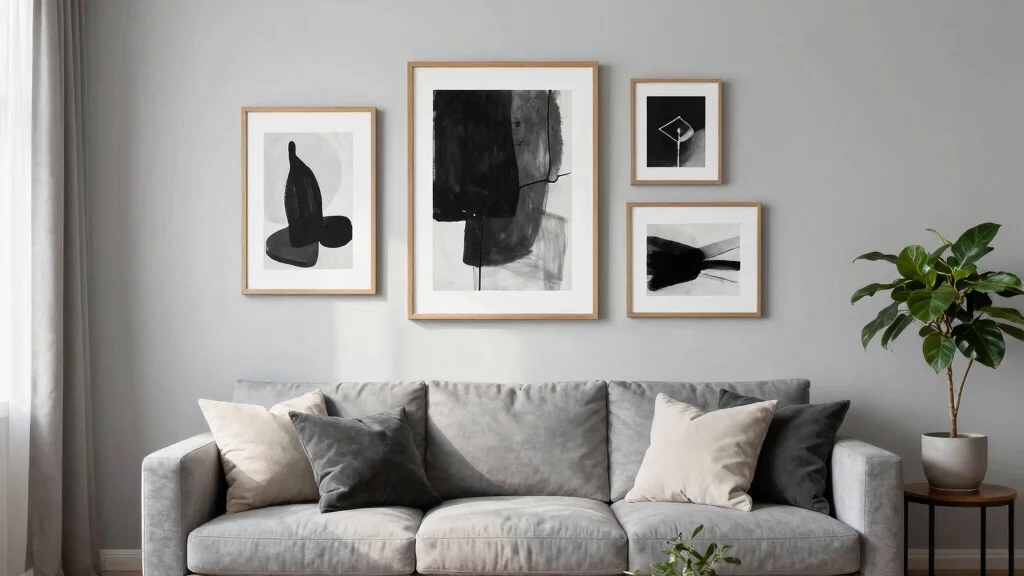
Creating a beautiful and balanced wall art layout can be a challenge. You want your space to feel inviting and cohesive, but figuring out how to arrange your artwork can be tricky. That’s why I put together this post—because we all deserve a home that reflects our style and makes us feel good.
If you’re passionate about home decor, art, or simply want to elevate your living space, this guide is just for you. Whether you’re an experienced decorator or just starting, you’ll find ideas that suit your taste and style.
Inside, you’ll discover 18 creative wall art layout ideas designed to inspire you. Each idea is practical and easy to implement, helping you achieve that perfect wall balance you’ve been craving. From symmetrical designs to nature-inspired aesthetics, these layouts not only beautify your home but also give it a unique personality. Get ready to transform your walls!
Key Takeaways
– Diverse Layouts: Explore 18 unique wall art arrangements that range from symmetrical to asymmetrical, catering to various aesthetics.
– Personal Touches: Incorporate your personality into your wall decor with ideas that allow for customization and personal expression.
– Balancing Techniques: Learn how to achieve visual harmony on your walls, ensuring that your art pieces complement one another.
– Practical Tips: Discover actionable advice on size, spacing, and styles that will make your wall decor shine while avoiding common mistakes.
– Seasonal Ideas: Keep your space fresh by rotating your art with seasonal themes, making it easy to stay inspired year-round.
1. Symmetrical Balance
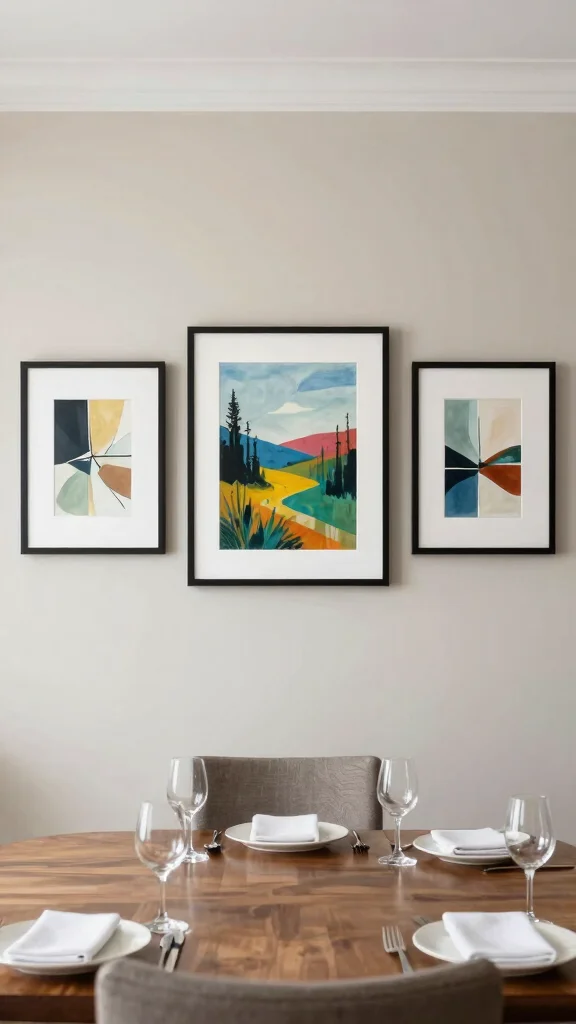
Symmetrical balance in wall art brings a sense of tranquility and harmony to your space. By placing artworks of the same size on either side of a central piece, you create an effortlessly appealing look that soothes the eye. For example, flanking a large canvas with two identical framed prints helps draw attention smoothly across the wall, creating visual stability.
To achieve this design, think about using pieces that share a common theme or color palette. Pay attention to the spacing around the artworks, ensuring it feels cohesive and well-structured. Choosing similar frames can also unify the arrangement, making it feel intentional and polished.
Consider these tips to enhance symmetry in your design:
• Pair two identical frames with a larger central piece.
• Install equal spacing for a balanced aesthetic.
• Use matching frames to create a unified look.
This layout is perfect for formal settings, such as dining rooms or entryways, making them feel inviting and organized.
2. Gallery Wall with a Twist
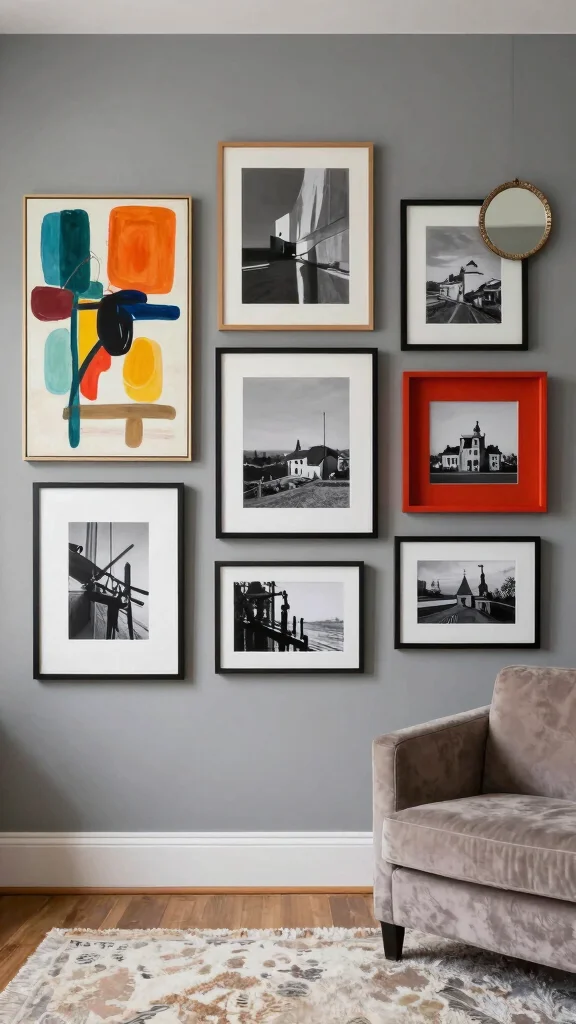
A gallery wall can be a canvas for your creativity, breaking away from traditional layouts. Mixing various frame styles, colors, and sizes creates an engaging visual experience that tells your unique story. This eclectic arrangement allows for personal expression, showcasing everything from striking paintings to cherished photographs.
To bring this idea to life, start with a focal point and build around it, ensuring a sense of flow. Laying the frames on the floor first can help you visualize the layout before committing to the wall. Incorporating different textures, like woven pieces or 3D objects, adds depth and interest to the overall design.
Keep these tips in mind for a dynamic gallery wall:
• Start with a strong focal piece and expand outward.
• Lay out frames on the floor for the best arrangement.
• Include unique textures for added depth and diversity.
This layout is ideal for living rooms or hallways, inviting viewers to share in your stories through art.
Did you know 82% of gallery walls feel more polished when you start with a single focal point? Mix frames, sizes, and colors around it, and your wall art layout practically tells your story—without shouting for attention.
How To Choose the Right Wall Art Layout
Choosing the right wall art layout can transform your living space, giving it character and balance. Here are some key factors to consider when selecting the perfect arrangement for your home.
1. Size Matters
The size of your wall art pieces is crucial for achieving a balanced look. Large artwork can be a striking focal point, while smaller pieces work best in groups. Measure your wall space before starting. A good rule of thumb is to aim for artwork that occupies about 60-75% of the wall space for a visually pleasing effect.
2. Style Compatibility
Make sure the wall art you choose aligns with your home decor style. If you have a minimalist aesthetic, opt for simple, clean designs. For a more eclectic vibe, mix different styles and textures. Consider the colors and materials in your space to ensure a cohesive look that feels intentional and not haphazard.
3. Theme and Purpose
Decide on a theme that resonates with you. Are you going for a nature-inspired layout, a monochromatic scheme, or an interactive art display? Think about the emotions you want to evoke and the story you wish to tell. The theme will guide your choices and help create a unified look.
4. Wall Space and Layout Options
Be aware of the wall space you have available. A narrow wall might benefit from vertical stacks or a gallery wall with a twist, while a larger area could accommodate a grid layout or a large-scale art piece. Visualize how your chosen layout will fit within the space. Use painter’s tape to outline the proportions on the wall for a better understanding.
5. Color Coordination
The colors in your artwork should complement the existing color palette of your space. You can choose a monochromatic scheme for a subtle effect or bold color blocks for a striking contrast. Use color swatches to match your art with your walls, furniture, and décor elements. This ties everything together beautifully.
6. Personal Touches
Incorporate artwork that reflects your personality and interests. Family photos, travel memorabilia, or pieces from local artists can add a unique flair to your walls. Personal touches make your space feel more like home, creating an inviting and warm atmosphere.
Pro Tip: Before committing to a layout, take a photo of your arrangement and view it on your phone. This method can help you see if the art pieces work well together and how they look in your space without making permanent changes right away.
Choosing the right wall art layout can be a fun and creative process. By focusing on size, style, theme, wall space, color, and personal touches, you can create a visually appealing arrangement that enhances your home decor. Remember, the goal is to express yourself while maintaining a sense of harmony and balance in your living space.
3. Grid Layout
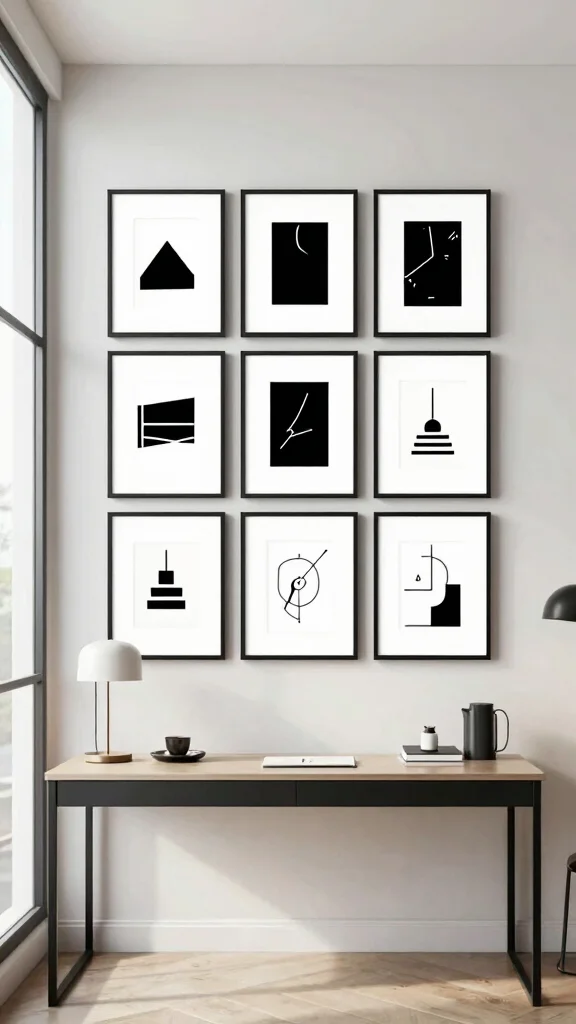
A grid layout is your go-to for a sleek and organized wall art display. By aligning several pieces in a structured grid, you create a striking focal point that captures attention without overwhelming the viewer. This approach can turn any wall into a sophisticated showcase of art.
To implement this design effectively, choose identical frames for a uniform appearance. Maintaining even spacing between artworks is key to achieving a professional look. Experimenting with different sizes can add intrigue, with larger pieces serving as anchors in the grid.
Try these tips for a successful grid layout:
• Use matching frames for a cohesive effect.
• Ensure even spacing for a polished look.
• Mix in larger pieces to create focal points.
This arrangement shines in home offices or creative studios, where clarity and inspiration work hand in hand.
4. Asymmetrical Art Arrangement
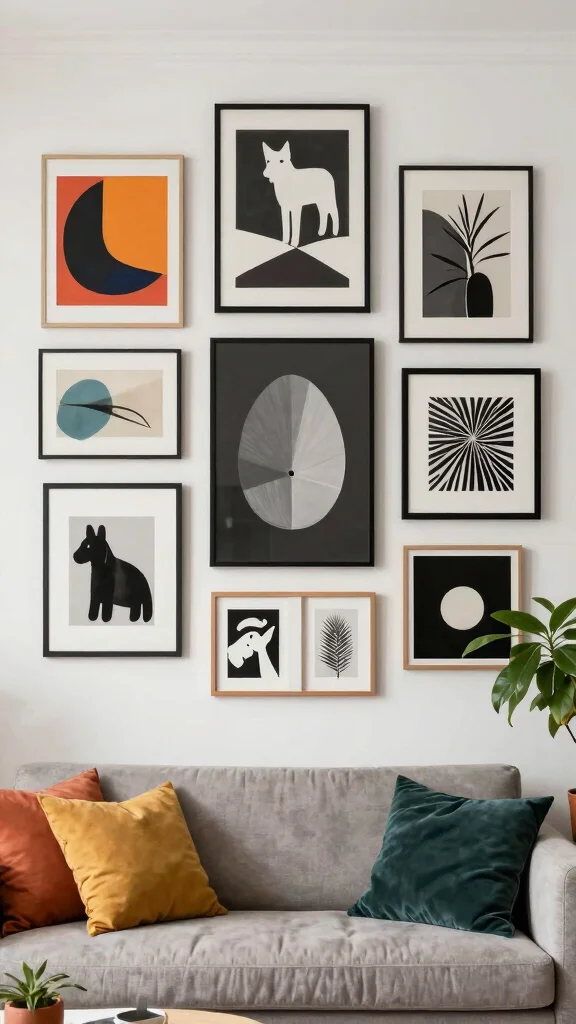
For a stylish and contemporary touch, explore an asymmetrical art arrangement. This dynamic layout introduces playful energy by placing artworks of various sizes at different heights. It’s a bold choice that adds character and creativity to any space.
To achieve balance in this arrangement, mix larger pieces with smaller ones to create visual intrigue. Keep the color scheme in mind; using bold colors can unify diverse elements. Consider using hooks and nails that allow you to adjust the layout without damaging your walls, making it easy to refresh your display.
Incorporate these tips for a captivating asymmetrical arrangement:
• Balance larger works with smaller ones for visual interest.
• Use bold colors to tie the pieces together.
• Experiment with placement for a playful effect.
This style is perfect for casual living spaces or bedrooms, injecting a vibrant energy that feels alive.
5. Floating Shelves with Art
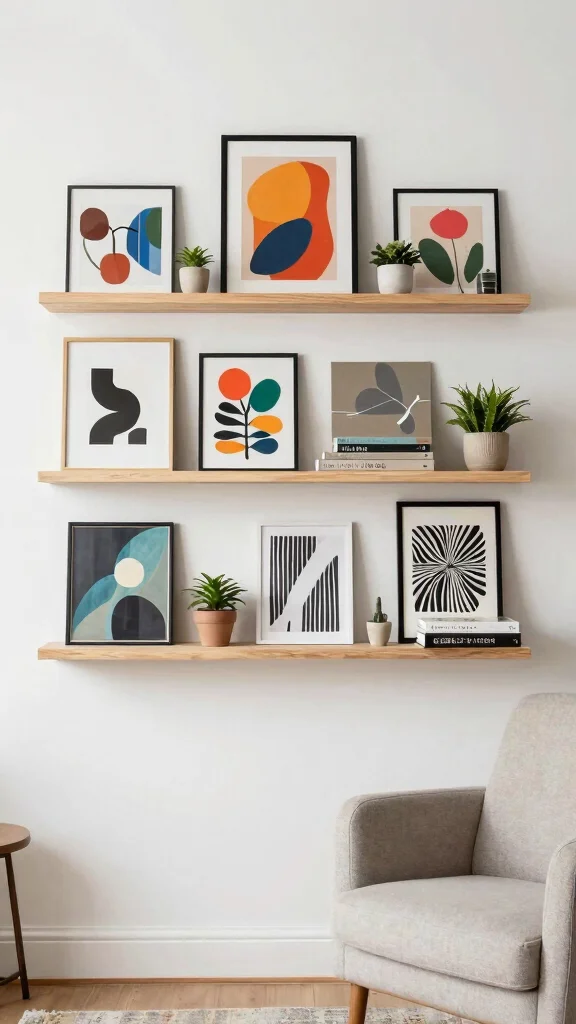
Floating shelves offer a creative twist on traditional wall art displays, allowing for flexibility and dimension. This layout enables you to frequently change your art, making it a dynamic feature of your decor.
To create an interesting arrangement, install shelves at varying heights for added visual appeal. Mixing artwork with decorative objects like books or plants can create a curated look that feels intentional. Ensure that the shelves are securely mounted to provide safety and stability.
Consider these tips for displaying art on floating shelves:
• Use shelves at different heights for variety.
• Mix art with decorative elements for a curated effect.
• Ensure secure installation for safety.
This style is especially suited for small spaces, like apartments, where versatility and creativity are crucial.
6. Vertical Stacks
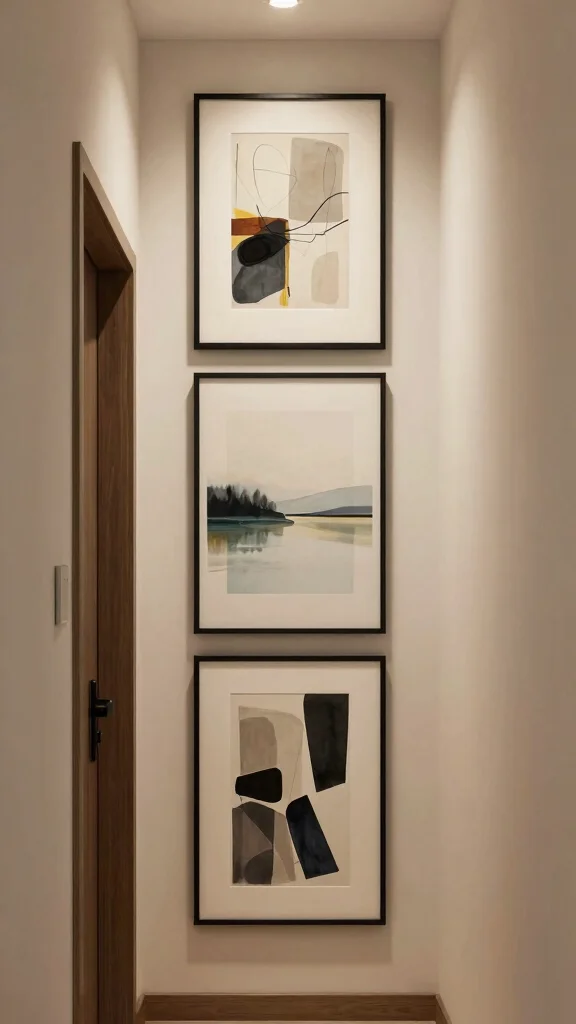
For a unique take on wall decor, consider stacking your artwork vertically. This approach maximizes wall space and creates a striking visual effect, particularly in narrow areas like hallways.
To make your vertical stack engaging, align the top of the stack at eye level for easy viewing. Incorporating pieces of varying heights will maintain interest and prevent a monotonous look. Ensure that the stack feels cohesive by using matching colors or themes throughout.
Implement these tips for effective vertical stacking:
• Align the top at eye level for best visibility.
• Mix heights for a dynamic appearance.
• Use a cohesive color scheme for harmony.
This innovative layout is ideal for transforming unused corners into stylish displays, showcasing your favorite pieces.
7. Monochromatic Scheme

A monochromatic wall art layout is all about simplicity and sophistication. By using a single color or varying shades, you create an elegant atmosphere that reduces visual clutter and enhances your space.
To pull off this look, stick to one color family across all your artworks. Incorporate various textures, such as paintings, prints, and textiles, to add depth and richness. Choosing a soft backdrop allows the artworks to take center stage, creating a serene environment.
Keep these tips in mind for a successful monochromatic scheme:
• Use one color family for all artworks.
• Incorporate various textures for added depth.
• Choose a neutral background to highlight the art.
This style is perfect for bedrooms or modern living areas, promoting a calm and cohesive design.
8. Nature-Inspired Layout
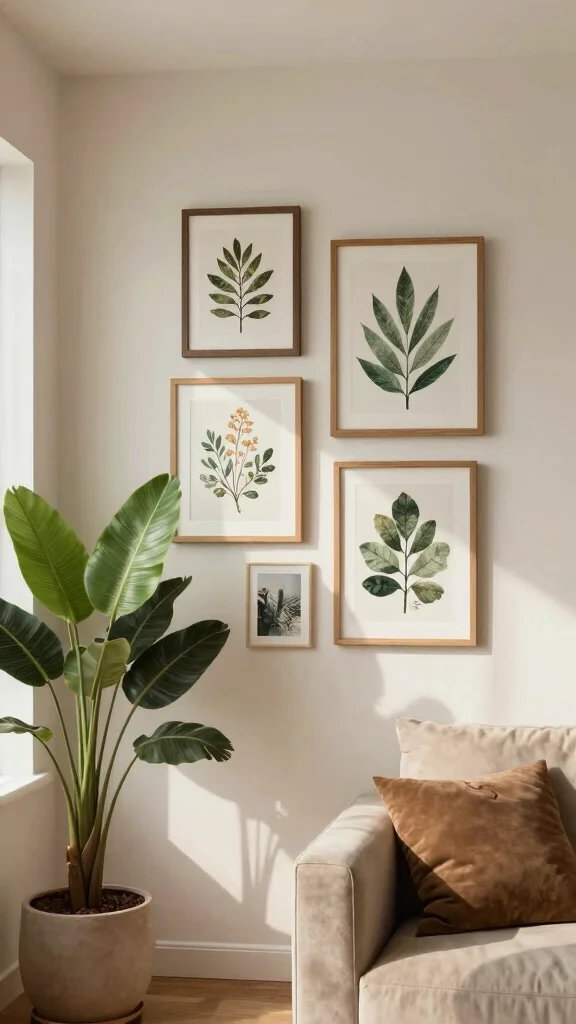
Incorporating nature into your decor is a wonderful way to create a calming atmosphere. A nature-inspired wall art layout can feature botanical prints, landscape photography, or earthy textures that resonate with the natural world.
To achieve this look, use organic shapes and colors that echo nature. Integrating wooden frames can enhance the rustic feel of your artwork. Adding real plants alongside your art brings an immersive experience that connects your indoor space to the outdoors.
Consider these tips for a nature-inspired layout:
• Use organic shapes and colors for a natural feel.
• Incorporate wooden frames for warmth.
• Add real plants for an immersive touch.
This arrangement can transform your home into a serene oasis, perfect for any space needing a breath of fresh air.
9. Large Scale Art
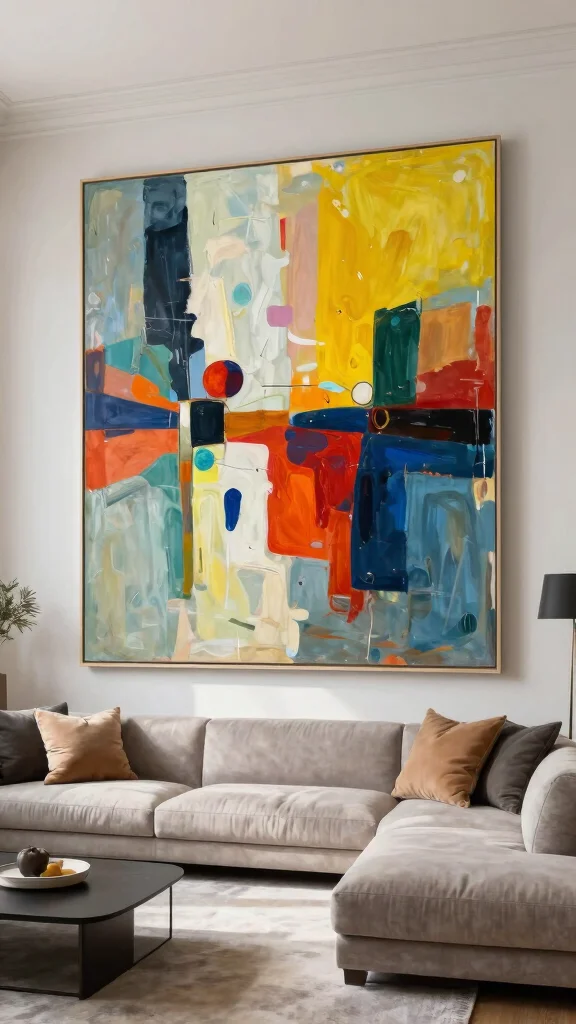
When it comes to wall art, larger pieces can make a significant impact. A large-scale artwork serves as a focal point, creating an immediate conversation starter and setting the tone for the room.
To ensure balance, choose one central piece to avoid overwhelming the space. Make sure the artwork complements your room’s color scheme for a harmonious look. Hanging the art at eye level maximizes its impact, making it a striking feature in your decor.
Keep these tips in mind for displaying large-scale art:
• Select a central piece to focus attention.
• Ensure colors harmonize with the surrounding decor.
• Hang at eye level for maximum effect.
This layout is particularly effective in spacious living rooms or open-plan areas, drawing attention and igniting conversation.
10. Minimalist Black and White
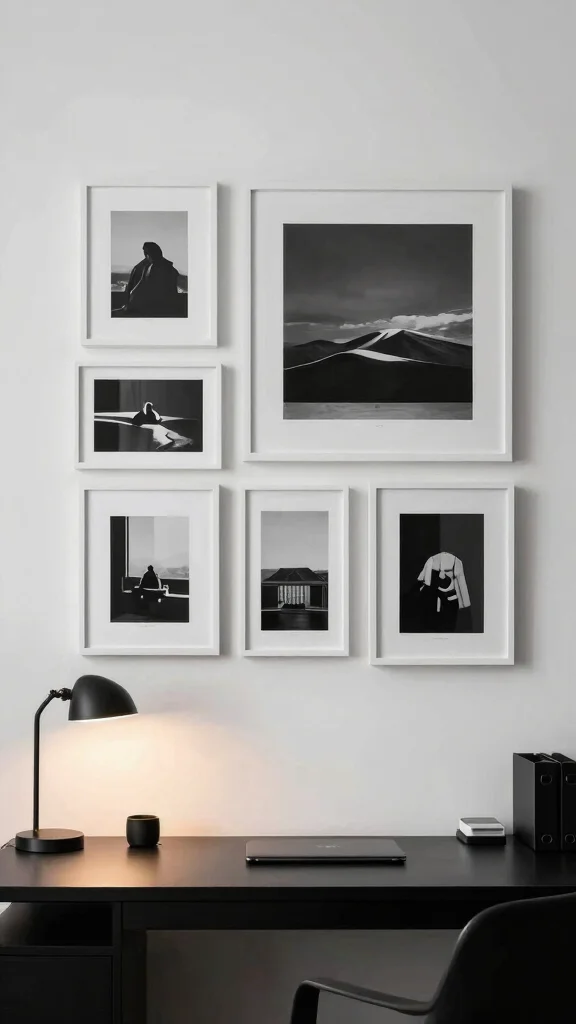
A black and white art layout captures the essence of minimalist design. This classic aesthetic is rooted in simplicity and elegance, making it ideal for modern environments.
To create impact, choose high-contrast artworks that stand out against each other. Using sleek, simple frames enhances the polished appearance of your display. Keeping the surrounding decor minimal emphasizes the artwork, allowing it to shine as the focal point.
Consider these tips for a minimalist black and white layout:
• Choose high-contrast pieces for striking visuals.
• Use sleek frames for a refined look.
• Maintain minimal surrounding decor to highlight the art.
This style is versatile enough to complement any room, from chic dining areas to sophisticated offices.
11. Layered Textures
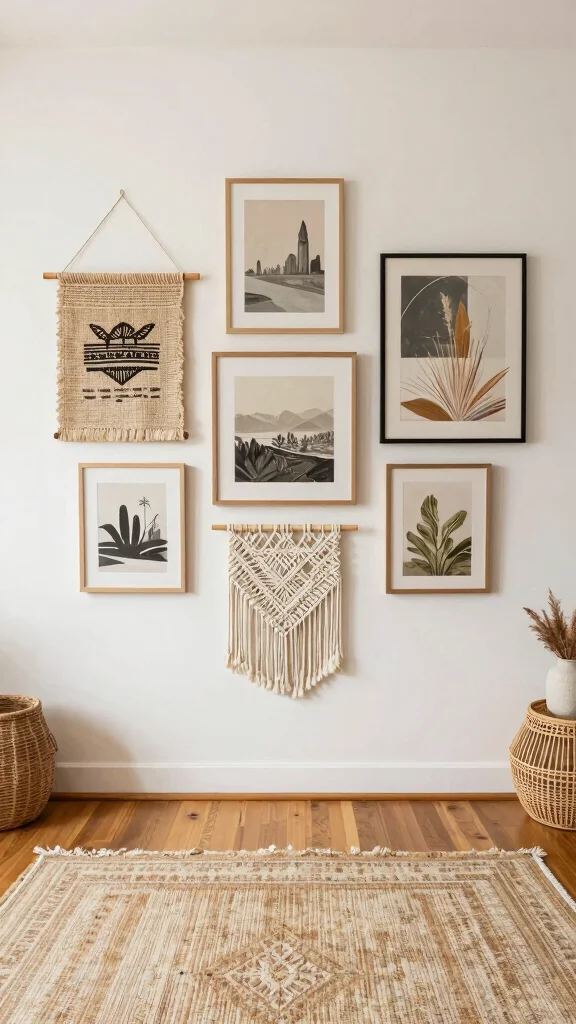
Layering different textures in your wall art can add a captivating depth and visual interest to your space. By combining paintings, textiles, and wall hangings, you create a multi-dimensional effect that draws the eye.
To achieve this look, mix materials such as canvas, wood, and fabric to create varied textures throughout your display. Using different frame styles enhances the eclectic feel, providing a unique charm. Keeping the color palette cohesive ensures harmony among the diverse elements.
Consider these tips for a textured arrangement:
• Mix materials for varied textures and depth.
• Use different frame styles for an eclectic vibe.
• Keep the color palette cohesive for visual harmony.
This design approach is perfect for bohemian-styled rooms or eclectic spaces celebrating creativity.
12. Art and Mirrors Combo
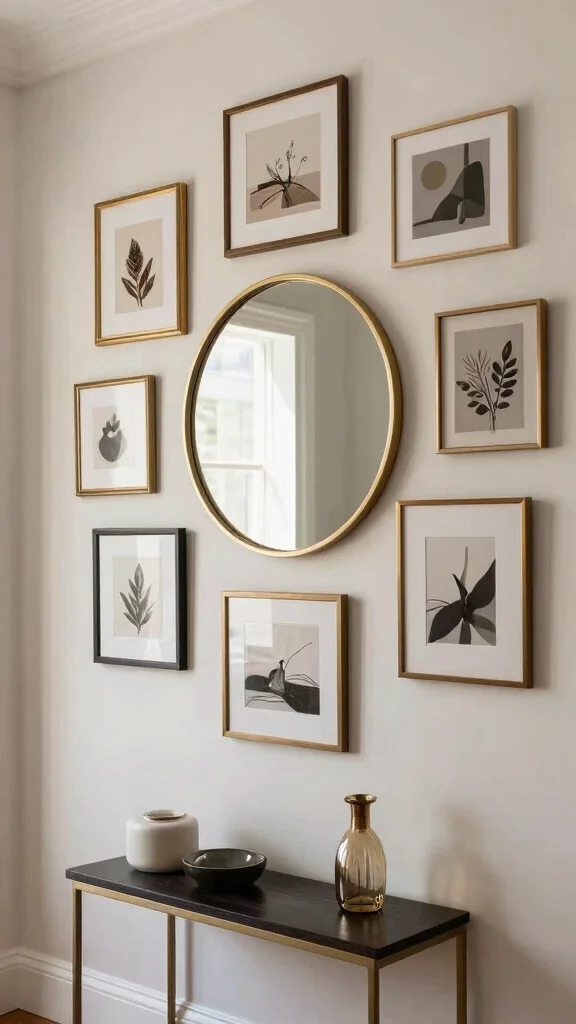
Combining art with mirrors is a fantastic way to amplify space and light in your home. This layout not only beautifies your walls but also enhances brightness, making a room feel more open and airy.
To create a captivating effect, position mirrors strategically to reflect both light and artwork. Using different shapes of mirrors can add visual interest and variety to the display. Ensure the art complements the mirror design for a harmonious look that feels cohesive.
Keep these tips in mind for an art and mirrors combo:
• Position mirrors to reflect light and art effectively.
• Mix mirror shapes for added intrigue.
• Ensure art complements the mirror for a unified design.
This layout is particularly effective in smaller spaces, creating the illusion of a larger area while adding style.
13. Seasonal Changes

Refreshing your wall art with the seasons is a delightful way to keep your decor feeling new and exciting. Rotating between warm autumn hues and cool winter tones allows you to reflect the changing environment and create a dynamic atmosphere.
To maintain the quality of your seasonal artwork, store pieces safely to prolong their life. Choosing themes that resonate with each season, like florals in spring and cozy landscapes in fall, makes the transition seamless. Simplifying the process of changing art keeps your decor lively and engaging.
Consider these tips for seasonal art changes:
• Store seasonal pieces safely for longevity.
• Choose seasonal themes for a cohesive look.
• Make changes easy to keep the decor fresh.
This approach fosters creativity in your space, ensuring it feels relevant and inviting throughout the year.
14. Personal Touches

Incorporating personal and meaningful art adds warmth and character to your home. Displaying photos, travel souvenirs, or handmade pieces creates a unique narrative that reflects your life experiences.
To achieve this, create a dedicated space for personal items among other decor elements. Framing photographs or children’s artwork adds a polished touch while celebrating your cherished memories. Including small mementos, such as postcards or tickets, brings back fond recollections and adds depth to your display.
Keep these tips in mind for adding personal touches:
• Designate a space for personal items within your decor.
• Frame cherished photos for a refined look.
• Incorporate small mementos to spark memories.
This layout is perfect for family spaces, fostering warmth and a sense of belonging.
Personal touches make a wall art layout feel like your story, not a display. Gather photos, travel souvenirs, and handmade pieces, then group them in a dedicated corner to create warmth and narrative. Your home will thank you for the memories.
15. Classic Frame Gallery
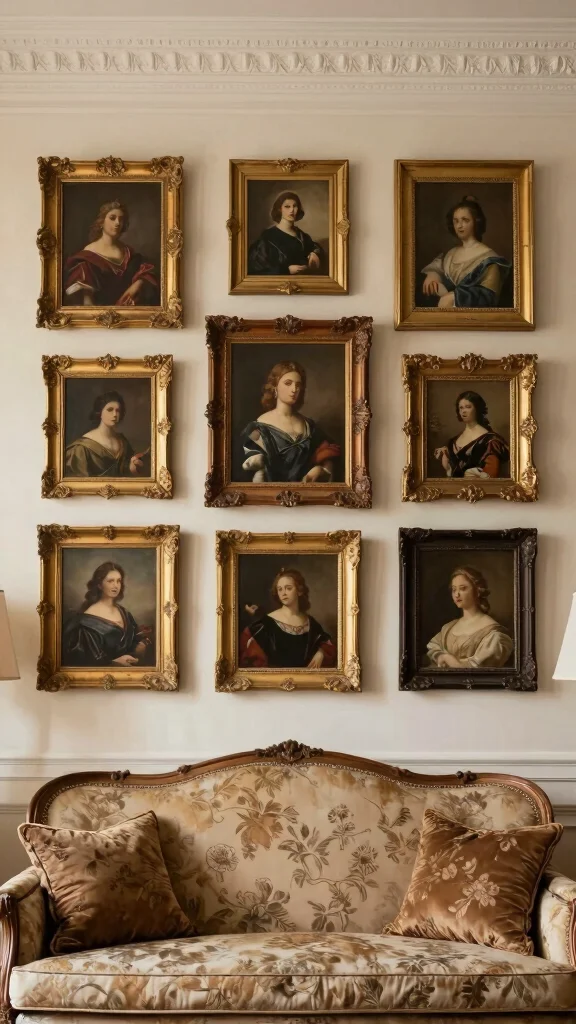
Classic frames never go out of style, offering a timeless elegance to any wall art display. Using ornate or traditional frames for your gallery wall exudes sophistication and grace, creating an inviting environment.
To enhance this classic look, choose frames with rich textures or colors that add depth and interest. Hanging your art in a grid or linear formation maintains a sense of symmetry, making the arrangement feel well thought out. Mixing classic art pieces with modern layouts offers a fresh and exciting take on tradition.
Consider these tips for a classic frame gallery:
• Choose ornate frames to enhance the elegance.
• Maintain symmetry with a grid or linear arrangement.
• Combine classic art with modern layouts for freshness.
This style is perfect for traditional homes or any space where you want to convey sophistication and timeless beauty.
16. Interactive Art
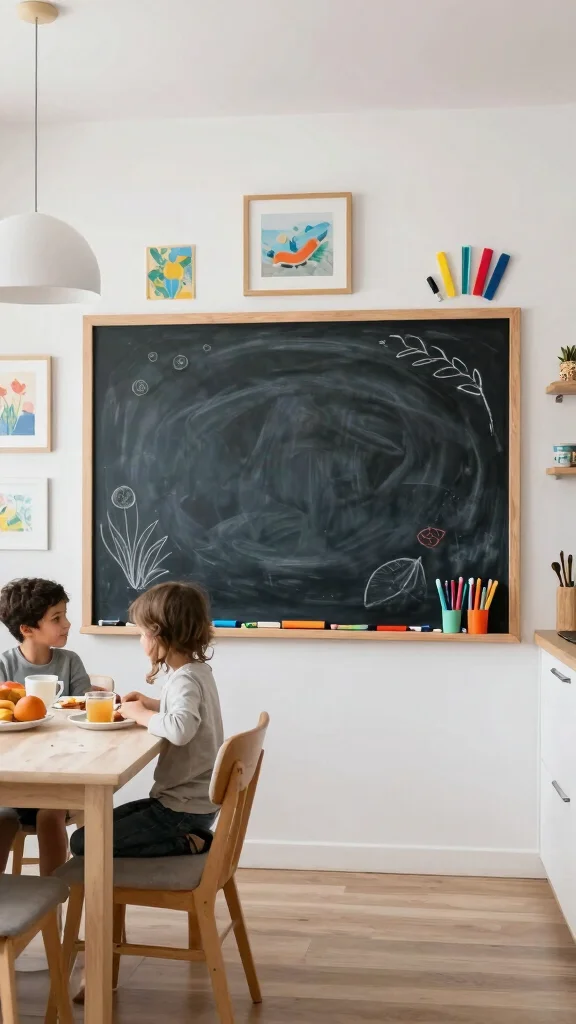
Bringing interactive art into your home can ignite conversation and curiosity. This can include elements like chalkboards, pegboards, or magnetic boards that allow for frequent changes to the display.
To maximize engagement, position interactive art in common areas where everyone can enjoy it. Encouraging family members or guests to contribute to the display adds a personal touch and invites creativity. Keeping surrounding decor minimal ensures that the interactive piece remains the focal point.
Try these tips for incorporating interactive art:
• Place interactive pieces in high-traffic areas.
• Invite contributions from family and friends.
• Keep decor minimal to spotlight the interactive element.
This layout is perfect for kitchens or play areas, where creativity and interaction thrive.
17. Color Block Arrangement
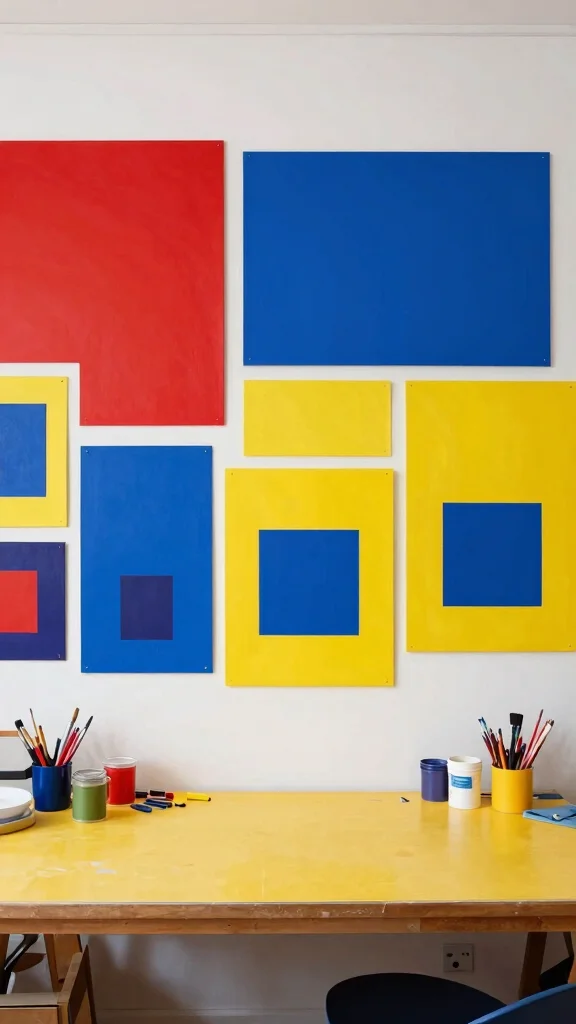
Using color block arrangements can create a striking visual impact on your walls. By grouping artworks based on color, you establish a vibrant display that energizes the entire space.
To achieve this effect, choose a maximum of three colors to avoid overwhelming the viewer. Mixing contrasting colors can create dramatic effects, while balancing bold hues with neutral backgrounds maintains harmony. This arrangement allows you to express your creativity and style in a bold way.
Implement these tips for a color block arrangement:
• Limit to three colors for a cohesive look.
• Use contrasting colors for dynamic visuals.
• Balance bold hues with neutral backgrounds.
This layout works wonderfully in creative spaces like studios or colorful living rooms, fostering an environment where fun and expression flourish.
Fun fact: Color block arrangements shine when you limit yourself to three colors. This maximum keeps your wall art layout bold, yet balanced, and makes it easy to group pieces by color family for a cohesive, gallery-worthy display.
18. Timeless Vintage Look
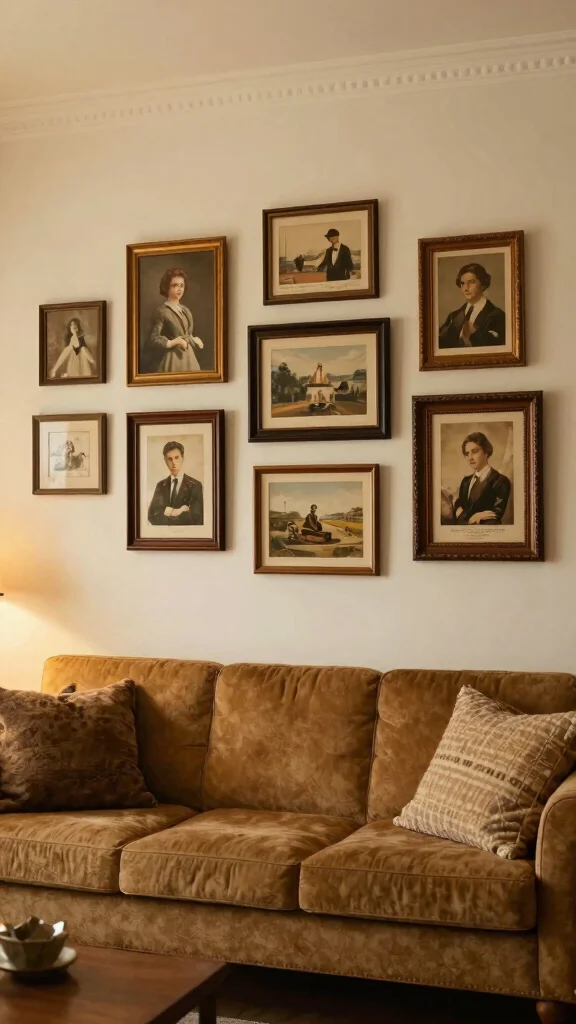
Embracing vintage elements in your wall art layout adds a charming touch of nostalgia. Mixing old and new art pieces creates an engaging dynamic that celebrates history and personal stories.
To achieve this vintage look, hunt for unique finds at thrift stores that complement your decor. Framing antique pieces with classic frames enhances their authenticity and appeal. Using a neutral background allows the vintage character to shine, creating a warm and inviting atmosphere.
Consider these tips for achieving a timeless vintage look:
• Seek unique thrift store finds to enhance your decor.
• Frame antique pieces with classic framing.
• Use neutral backgrounds to highlight vintage elements.
This style thrives in homes filled with character, making it ideal for creating warm and inviting living spaces.
Conclusion
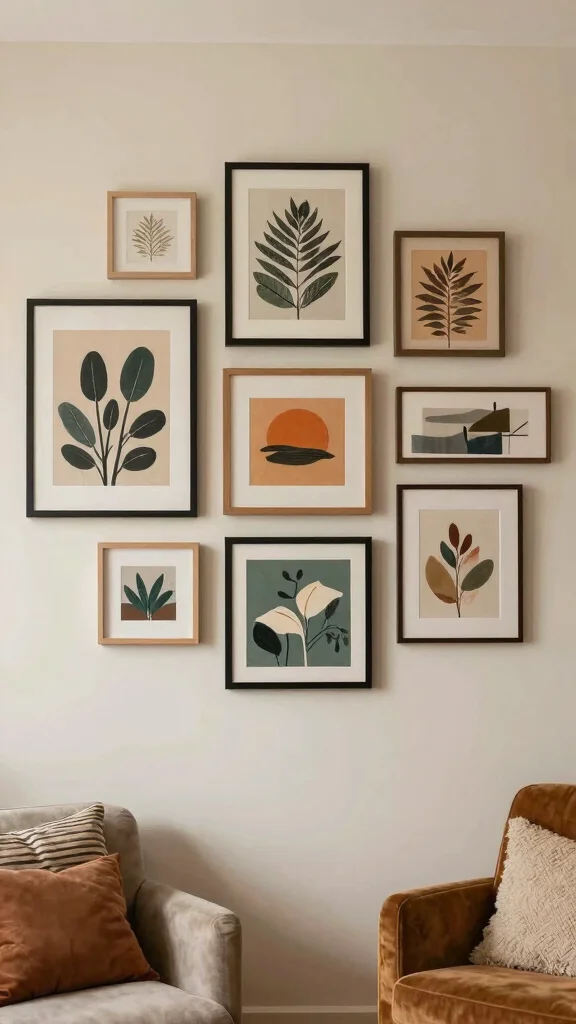
Creating a beautiful and balanced wall art layout can significantly enhance your home’s aesthetic. With these 18 ideas, you can mix and match styles to express your unique taste while keeping your space visually appealing.
Don’t hesitate to experiment; your walls are a canvas waiting to tell your story through art.
Frequently Asked Questions
What is the best approach to creating a minimalist wall art layout for balanced walls?
Start by assessing your space and choosing a calm color palette. For minimalist wall art layouts, fewer pieces with clean lines often look more intentional. Lay out your plan on the floor with paper templates or use painter’s tape on the wall to map the shapes. Center the arrangement around a focal piece and keep the edges neatly aligned to create a wall art layout that feels balanced. Maintain generous negative space and stick to simple frames and finishes to nail the minimalist vibe.
These steps reflect practical interior design tips for achieving a calm, cohesive display you’ll love waking up to.
How can I plan a gallery wall that stays cohesive without feeling cluttered?
Think of your wall as a visual story. Start with a strong centerpiece, then add smaller pieces around it in either a tight grid or a graceful salon-style cluster. Gather 6-9 works that share a unifying thread — same frame color, similar matting, or a complementary color palette — to lock in a sense of gallery wall ideas. On the floor, test different arrangements until the spacing reads evenly, then translate it to the wall with painter’s tape. This practical approach gives you a home decor inspiration-friendly display that stays cohesive and stylish.
What are practical tips for measuring and spacing when hanging wall decor to achieve perfect wall balance?
Start with a plan: measure the total width of the group, decide on a hanging height (eye level, about 57-60 inches from the floor), and choose a consistent spacing—roughly 2-4 inches between frames or groups. Use painter’s tape to mark the layout on the wall, then double-check levelness with a spirit level before nailing anything. If you’re mixing sizes, treat the arrangement as a single unit that breathes—don’t clutter corners or push pieces too close. This hands-on approach makes your wall art layout feel intentional and perfectly balanced.
How can I mix different frame sizes and art styles while keeping a cohesive home decor inspiration?
Great question. Start with a limited color palette and a unifying framing finish to tie diverse pieces together. Anchor the display with one large piece, then arrange smaller frames around it in an intentional rhythm—alternating vertical and horizontal shapes can add interest, but keep margins consistent. Use matching matting or spacing to create visual continuity, so the collection reads as a single story, not a jumble of pieces. With these interior design tips, you’ll achieve compelling wall decor styles while staying true to your home decor inspiration.
Are there quick DIY tricks to preview or mock up a wall art layout before you hammer a nail?
Absolutely. Cut pieces of kraft paper the same size as your frames, tape them to the wall, and rearrange until it feels right—that’s your wall art layout in action. Alternatively, use painter’s tape to outline the frames on the wall and snap a photo from a distance to judge balance. You can also try a simple floorplan layout with cards or use a room-planning app to visualize the final look. These interior design tips save trips to the hardware store and keep your wall perfectly balanced before you commit.
Related Topics
home decor
minimalist design
wall art layout
gallery wall ideas
interior design tips
decorating small spaces
easy arrangements
budget friendly decor
modern aesthetics
quick updates
wall decor styles
DIY wall art
Leave a Reply