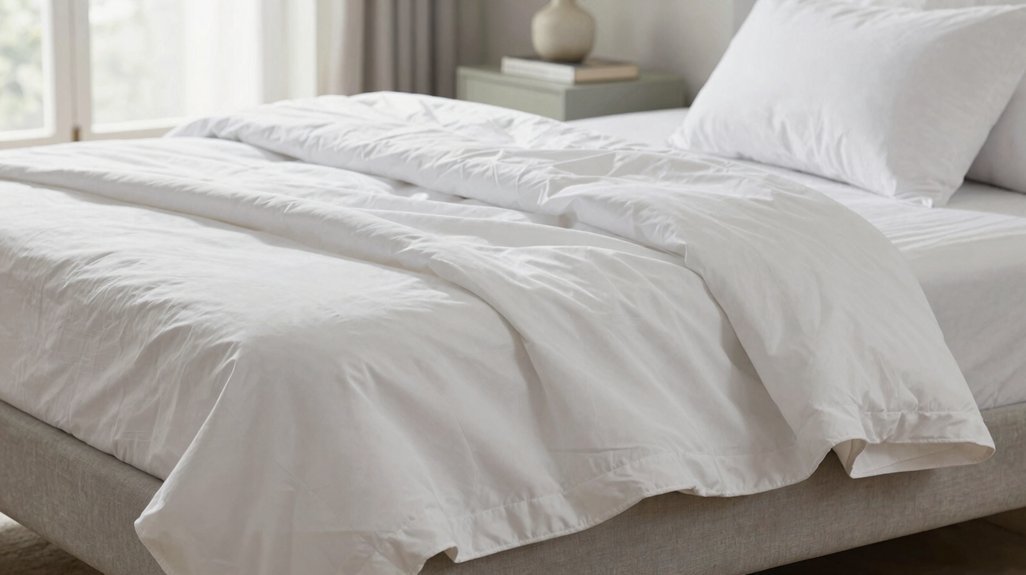
You might think a bed sham is simply another pillowcase, but it’s a distinct bedding component engineered for presentation rather than sleep contact.
A sham serves as a decorative envelope, typically measuring 26″ × 20″ for standard, 30″ × 20″ for queen, and 36″ × 20″ for king configurations, with flange widths ranging from 1.5″ to 3″.
You’ll encounter three primary closure systems: envelope overlaps with 6″–8″ fabric folds, concealed zippers with #3 nylon coils, or button plackets with 1″–1.5″ spacing.
The front face employs jacquard weaves, embroidery, or appliqué; the reverse uses plain weave cotton or poly-cotton blends at 200–300 thread count.
Unlike standard pillowcases, which prioritize breathability for 6–8 hour skin contact, shams prioritize dimensional stability and visual structure.
Your sleeping pillows hide behind them; your shams face outward.
This distinction matters because improper use accelerates fabric degradation and compromises the layered aesthetic.
What separates a sham from mere decoration, and why do hospitality standards insist on their inclusion?
What Is a Bed Sham and Why Use One?
Although bed linens serve a functional purpose, a bed sham improves your bedding ensemble through deliberate visual architecture.
A bed sham functions as a decorative pillow covering that creates a finished, layered look. Bed shams are typically positioned at the front of your sleeping arrangement, establishing visual hierarchy through intentional placement.
| Size | Dimensions |
|---|---|
| Standard | 26″ × 20″ |
| Queen | 30″ × 20″ |
| King | 36″ × 20″ |
| Euro | 26″ × 26″ |
Construction Specifications
The front displays embellishment, while the back uses solid fabric. Secure closure mechanisms include:
- Envelope-style overlap
- Hidden zipper
- Button fastening
Functional Applications
You use shams to:
- Achieve dimensional layering
- Substitute throw pillows decoratively
- Support lounging or reading postures
Unlike standard pillowcases, which prioritize utilitarian protection, shams emphasize ornamental presentation. Remove or reposition them for optimal sleep ergonomics.
Recommended Products

【Natural Linen Fabric】 Made of grade ramie linen and cotton Natural linen fabric makes it soft, comfortable, and breathable—good workmanship, tightly sewn

Breathable Material: EIUE bed pillow for sleeping goes with a breathable cotton cover and breathable down alternative microfiber, which is friendly to skin and ensures you a comfortable night's sleep.

【Natural Linen Fabric】 Made of grade ramie linen and cotton Natural linen fabric makes it soft, comfortable, and breathable—good workmanship, tightly sewn
What’s the Difference Between a Pillowcase and a Sham?
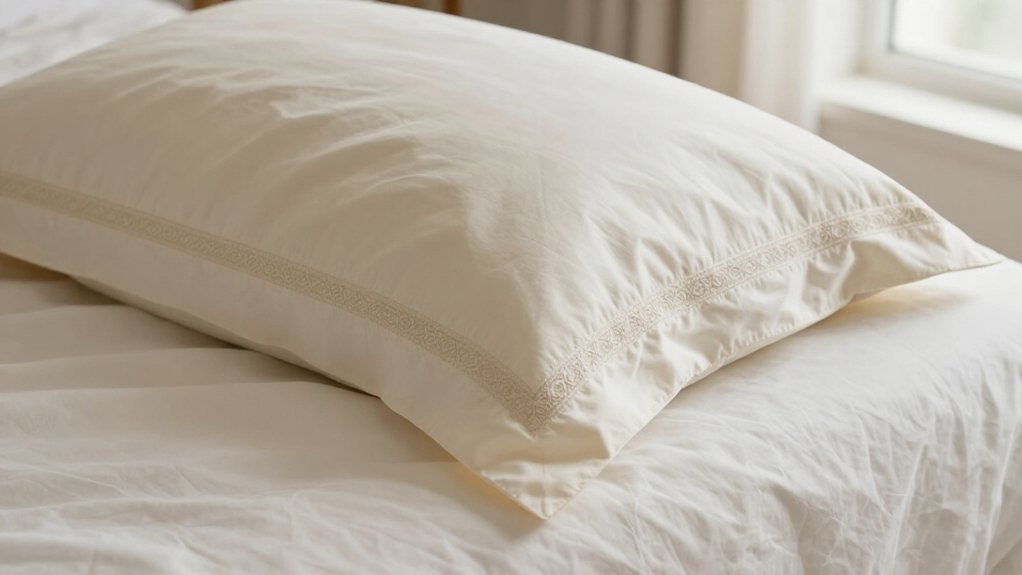
You’ll notice distinct functional and construction divergences when comparing these bedding components side by side. A pillowcase serves a utilitarian purpose: it shields your sleeping pillow from oils and perspiration, while a sham operates as a decorative false front engineered primarily for visual presentation rather than nightly contact.
Construction specifications reveal further contrasts; pillowcases typically employ open-ended designs without closure mechanisms, while shams integrate envelope overlaps or concealed zippers and buttons to maintain a refined, uninterrupted facade.
Recommended Products

【MATERIAL】100% Pure Natural Linen with Pre Washed, very soft, becomes softer after every wash. 160 ± 5% GSM (ATTENTION: There may be a little deviation because of the washing preshrunk process.) Certified according to STANDARD 100 by OEKO-TEX for environmentally friendly, responsible and sustainable fabric production.

【MATERIAL】100% Pure Natural Linen with Pre Washed, very soft, becomes softer after every wash. 160 ± 5% GSM (ATTENTION: There may be a little deviation because of the washing preshrunk process.) Certified according to STANDARD 100 by OEKO-TEX for environmentally friendly, responsible and sustainable fabric production.
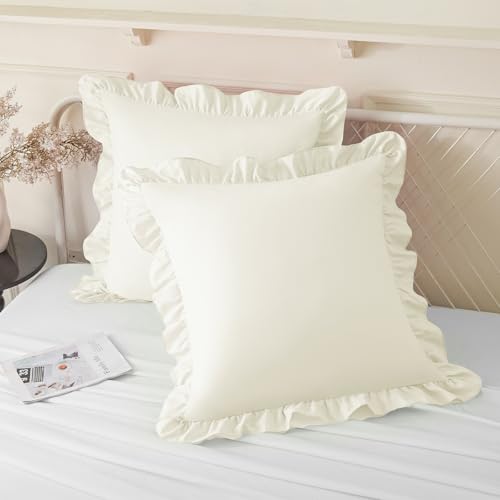
Soft and comfortable: Our pillowcases are made of ultra-fine fibers, with comfortable and breathable fabric that is soft and skin friendly. Good stitching and exquisite craftsmanship can also reduce loose threads.
Functional Purpose Contrast
You remove and wash pillowcases frequently. Shams stay cleaner because you take them off at night. When making the bed, you place shams in front, adding height and polish that bare pillowcases cannot achieve. Their textured fabrics and flanges prioritize visual impact over sleep comfort, so you don’t rest your face directly on them.
Construction Differences Highlighted
Because pillowcases and shams serve fundamentally distinct purposes, their construction diverges at every structural level. You will notice a pillowcase remains open on one end with minimal seaming, prioritizing rapid removal for laundering. By contrast, a sham functions as a decorative pillow cover, engineered with a concealed rear closure: envelope overlap, hidden zipper, or button band.
You encounter these critical fabrication distinctions:
- Opening Placement: Pillowcases expose one short end; shams, including Euro shams, position apertures centrally on the back panel to preserve frontal presentation.
- Surface Differentiation: Your pillowcase maintains bilateral uniformity, whereas sham fronts bear embellishments (flange, quilting, embroidery) against plain reverse fabric.
- Dimensional Structuring: Shams incorporate tailored gussets or cording to frame the pillow volumetrically; pillowcases conform slackly to sleeping pillows without architectural intent.
You sacrifice wash-and-go utility with shams, as decorative fronts compromise tactile comfort during sleep.
What Size Bed Sham Do You Actually Need?
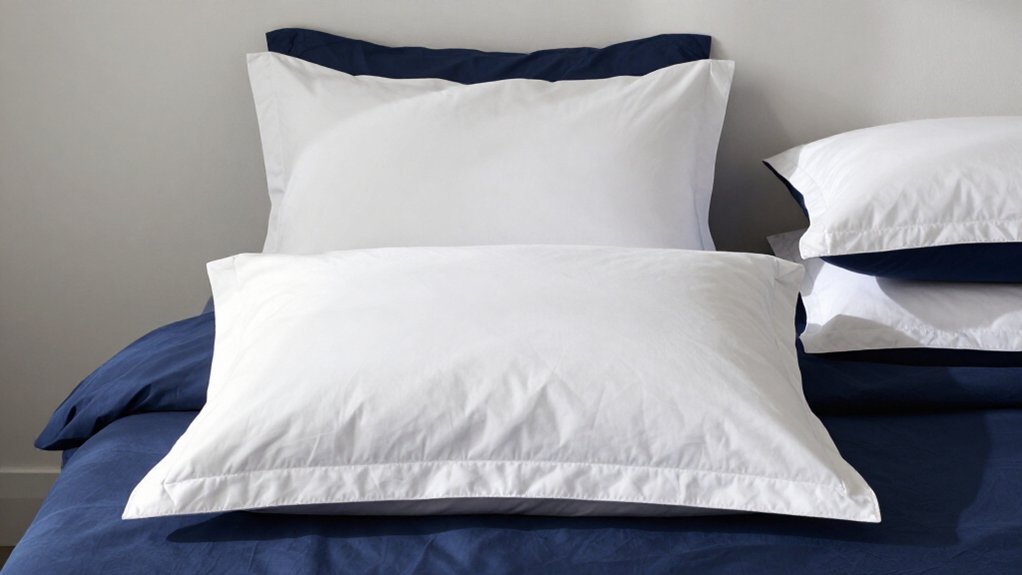
You’ll need to match your sham dimensions precisely to your pillow type for assured fit and aesthetic cohesion. Standard shams measure approximately 26 x 20 inches, queen shams run 30 x 20 inches, and king shams span 36 x 20 inches, while Euro shams accommodate square pillows at 26 x 26 inches.
Selecting the correct size ensures your decorative front panel presents smoothly without gapping at the closure, though some prefer sizing up for a fuller, more styled loft.
Recommended Products

Standard Size: This pillowcase set includes two watercolor flower throw pillow covers in standard Queen size, measuring 20 x 30 inches (approx. 50 x 76 cm). They are designed to fit commonly used pillow inserts for a neat, secure fit. Cover only; insert not included, giving you the flexibility to choose what works best for your needs

PACKAGE INCLUDES : Set of 1 hand block print lumbar pillow cover designed to fit most 14×36 inch lumbar pillows (insert not included). This decorative long lumbar pillow cover instantly refreshes your bedroom, living room, sofa, couch, bench, reading nook, or king bed with elegant artisan-inspired style.

PACKAGE INCLUDES : Set of 1 hand block print lumbar pillow cover designed to fit most 14×36 inch lumbar pillows (insert not included). This decorative long lumbar pillow cover instantly refreshes your bedroom, living room, sofa, couch, bench, reading nook, or king bed with elegant artisan-inspired style.
Standard Sham Dimensions
The standard sham, measuring approximately 26 inches by 20 inches, serves as the foundational decorative pillow covering in bedding ensembles. It is engineered specifically to encase standard-sized rectangular sleeping pillows of matching dimensions.
Standard shams measure 26 x 20 inches, and you’ll want to pair them with standard sleeping pillows for proper fit and visual harmony. Pillow shams are designed with a decorative front and solid fabric back. They sit in front of your main sleeping pillows for layered styling.
When selecting your standard size, verify measurements carefully, as dimensions vary by manufacturer. The baseline remains consistent: approximately 26″ by 20″.
- Fit standard shams with standard pillows (~26″ x 20″) for proportional coverage.
- Compare alternatives: king (36″ x 20″), queen (30″ x 20″), or Euro (26″ x 26″) shams serve different spatial functions.
- Audit brand specifications before purchasing, since “standard” lacks universal standardization.
Euro Sham Sizes
Unlike rectangular standard, queen, and king shams, Euro shams operate on an entirely different dimensional system. These square coverings measure 26 in x 26 in, designed specifically for Euro pillows rather than conventional rectangular sleep pillows.
Euro Sham Sizes vs. Standard Dimensions
| Sham Type | Dimensions | Pillow Shape |
|---|---|---|
| Euro | 26″ x 26″ | Square |
| Standard | 26″ x 20″ | Rectangular |
| Queen | 30″ x 20″ | Rectangular |
| King | 36″ x 20″ | Rectangular |
You’ll want to match your sham size precisely to your pillow size: a 26×26 Euro sham delivers the standard fit for most Euro pillows. Attempting to interchange Euro shams with rectangular sizes results in improper coverage and compromised aesthetics.
When styling your bed, position shams behind standard or king configurations. This layering technique creates dimensional depth while your sham-covered pillows maintain their structured square silhouette. Some manufacturers market “Euro sham” specifically to denote this square coverage requirement, distinguishing it from rectangular alternatives.
King Sham Measurements
Your purchasing decision hinges on precise measurement verification. A king sham is typically 36″ x 20″, engineered explicitly for king-size look and coverage across your bed’s surface plane.
Dimensional Specifications
- Primary measurement: 36″ x 20″ accommodates king pillows and frequently queen pillows, yielding a looser, fuller appearance.
- Pillow correlation: Sham sizing adheres to pillow sizing conventions; you match bedding to your displayed pillow’s dimensions.
- Layering application: Position king shams behind standard or queen sleeping pillows to generate visual loft in the front row.
If your pillows measure approximately 36″ long, select the 36 x 20 king sham. You’ll avoid tight, flat coverage while maintaining proportional aesthetic balance. Precision in this selection ensures the best bedding presentation without dimensional compromise.
Which Pillow Inserts Work Best for Each Sham Size?
How do you make certain your bed shams achieve that crisp, tailored appearance seen in hospitality showrooms? You match each sham to its corresponding insert with precision. Unlike a standard sham vs pillowcase comparison, shams come in various dimensions and require structured inserts to keep their shape.
Standard Shams (26″ x 20″)
You fit these with standard 26″ x 20″ rectangular bed pillows for a smooth, gap-free edge.
Queen Shams (30″ x 20″)
You select queen inserts at 30″ x 20″, achieving fuller proportions than standard offerings.
King Shams (36″ x 20″)
You pair these with king inserts at 36″ x 20″; mismatched sizing creates unsightly slack.
Euro Shams (26″ x 26″)
You use square 26″ x 26″ inserts so corners tension properly.
Different sizes demand exact alignment: verify sham size labels against insert dimensions to eliminate bunching.
Recommended Products

BOHO PILLOW SHAMS:Off White pillow shams standard 20x26IN set of 2(No Pillow Insert Included);Face:Face:50%Cotton 50%Polyester Jacquard; Reverse: 100% Plain Cotton

BOHO PILLOW SHAMS:White pillow shams king 20x36IN set of 2(No Pillow Insert Included);Face:Face:50%Cotton 50%Polyester Jacquard; Reverse: 100% Plain Cotton

BOHO PILLOW SHAMS:Off White pillow shams king 20x36IN set of 2(No Pillow Insert Included);Face:Face:50%Cotton 50%Polyester Jacquard; Reverse: 100% Plain Cotton
Cotton, Linen, Silk, or Polyester: How Do You Choose?
With dozens of weave structures and fiber compositions available, selecting the best sham fabric demands careful evaluation of performance characteristics against your operational requirements. You must weigh breathability, maintenance protocols, and aesthetic outcomes.
Fiber Comparison Matrix
- Cotton delivers superior breathability and simplified care cycles; you will find it ideal for high-frequency rotation.
- Linen provides dimensional texture and thermoregulation via flax cellulose structure; you gain relaxed visual depth with increased wrinkling propensity.
- Silk demands delicate handling protocols; you sacrifice wash durability for elevated surface luster.
Synthetic Alternative
Polyester offers cost-efficient wrinkle resistance. You achieve structural crispness with minimal ironing intervention, though vapor permeability decreases relative to cellulosic fibers.
Selection Criterion
Since shams function primarily as decorative facade elements, you should prioritize daytime visual performance: linen and silk excel here, while cotton and polyester optimize operational efficiency.
Recommended Products

【𝐏𝐋𝐄𝐀𝐒𝐄 𝐍𝐎𝐓𝐄】The package contains 𝐎𝐍𝐄 sham, not two.

Exquisite Waffle Weave Design: Classic yet stylish waffle weave design features three-dimensional, puffy and elegant appearance, brings casual sophistication and create a soothing retreat. Available in various colors, these pillow shams perfectly complement any home décor. Just decorate your comfortable pillows with our waffle weave pillowcase covers

Buttery Soft Materials: The front of our pillowcases is crafted from fluffy synthetic rabbit fur that has been OEKO-TEX certified. This certification guarantees that the material is hypoallergenic and environmentally friendly. The reverse side is made of soft velvet, delivering a sumptuously luxurious feel. The faux fur is thick, shaggy, and plush, offering a delightfully warm and cozy touch.
Can You Actually Sleep on a Bed Sham?
Fabric selection determines tactile performance, yet even ideal material specification cannot override fundamental design intent. A sham is a decorative covering, not engineered for nocturnal use.
A sham serves visual design, not sleep engineering—material quality cannot transform its fundamental purpose.
Structural Limitations
You’ll notice many shams employ textured weaves, structured fabrics, or flanged edges. These elements bunch against skin during sleeping. Pillowcases prioritize smooth, breathable surfaces; decorative pillows prioritize visual impact.
Practical Configurations
You have three operational protocols:
- Position shams behind sleeping pillows for lumbar or prop support
- Remove decorative pillows entirely before rest
- Layer shams atop regular pillowcases, maintaining direct head contact with standard cases
Maintenance Considerations
You preserve textile integrity by removing shams nightly. Decorative fabrics soil faster; laundering accelerates degradation of ornamental stitching and dimensional stability.
You can sleep directly on a sham. You generally shouldn’t.
Recommended Products
【Natural Linen Fabric】 Made of grade 30% linen and 70% cotton Natural linen cotton fabric makes it soft, comfortable, and breathable—good workmanship, tightly sewn. Color may be different in different light or on different screen

【Natural Linen Fabric】 Made of grade ramie linen and cotton Natural linen fabric makes it soft, comfortable, and breathable—good workmanship, tightly sewn
Exquisite Waffle Weave Design: Classic yet stylish waffle weave design features three-dimensional, puffy and elegant appearance, brings casual sophistication and create a soothing retreat. Available in various colors, these pillow shams perfectly complement any home décor. Just decorate your comfortable pillows with our waffle weave pillowcase covers
How Should You Arrange Bed Shams on a Made Bed?
- Stacked arrangement: Flat sleeping pillows with outward cuffs; layered shams above.
- Hotel-style layering: Leaning sleeping pillows; Euro shams rearward; standard/king shams forward.
- Size gradation: Largest shams back; smallest forward; bed completely framed.
Move shams behind sleeping pillows or off the bed completely before sleep to prevent soiling textured flanges.
Recommended Products

Size: Standard (20”×26” +2”) Color: Dark Grey ( exclude pillow, pack of 2)
【MATERIAL】100% Pure Natural Linen with Pre Washed, very soft, becomes softer after every wash. 160 ± 5% GSM (ATTENTION: There may be a little deviation because of the washing preshrunk process.) Certified according to STANDARD 100 by OEKO-TEX for environmentally friendly, responsible and sustainable fabric production.

Good Material: The pillow shams are made of 100% microfiber which is soft, lightweight to make you sleep easily
Why Choose a Bed Sham Over Decorative Pillows?
While decorative throw pillows can add visual interest to a bedroom, they often introduce unnecessary bulk and styling inconsistency that bed shams elegantly circumvent. You achieve a streamlined overall look because bed shams function as a decorative false front for your pillows, eliminating the cluttered aesthetic that throw pillows frequently create.
Technical Advantages of Bed Shams
Bed shams feature front-only embellishment with solid fabric backing, ensuring visual consistency from entryway sightlines. You select from standardized dimensions, standard, 26″ × 20″, queen, 30″ × 20″, or king, 36″ × 20″, for seamless bedding integration.
Construction details include overlap closures, concealed zippers, or rear buttons, delivering tailored presentation superior to visible fastenings on throw pillows. You also gain functional utility: bed shams prop you for reading, rendering them less decorative and more practical than conventional throw pillows.
Recommended Products

【100% Cotton Fabric】: Duvet cover set made of 100% cotton fabric, that is soft, skin-friendly, breathable, comfortable, durable and lightweight. The cotton duvet cover set get softer after every wash than other fabric, to be used all year. Keeping you warmer in cool weather and cooler when it's hot

100% Cotton,Available in Multiple Different Colors and Designs

HIGH-QUALITY COMFORT: 200 thread count for a soft, smooth and noiseless pillow protector that fits snugly over pillow, and a non-intrusive hidden zipper that won’t poke or irritate; fits 20×26 inch pillows
How Do You Keep Bed Shams Looking Fresh?
Bed shams reward the investment you’ve made in their tailored construction and front-facing embellishment with straightforward maintenance protocols that preserve their dimensional structure and color integrity across years of use.
Bed shams reward your investment with straightforward maintenance that preserves their structure and color for years.
You keep shams purely decorative by using separate sleeping pillowcases at night; this barrier protects against sweat and oils. Since shams typically rest atop the Top Sheet, they accumulate less direct contact soiling than primary sleep surfaces.
Core Maintenance Protocols
- Rotation cadence: Fluff and reposition each sham every time you remake the bed, distributing compression evenly across front panels and mitigating permanent creasing.
- Cleaning specificity: Follow care labels precisely; textured constructions like matelassé or linen-adjacent blends demand gentle cycles or localized spot treatment to retain dimensional stability.
- Environmental controls: Blot spills immediately without heavy soaking, store extras away from light exposure, and keep removed from the bed shams covered to prevent fading in colorways such as White, Pearl, Linen, or Slate.
Recommended Products
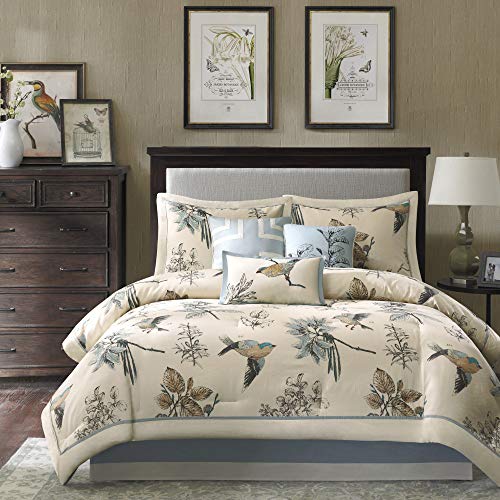
The Madison Park Quincy 7 Piece Comforter Set brings a warm country update to your bedroom.

Soft and Lightweight Comfort: Crafted with premium microfiber and ClevaHome’s unique Clipped Jacquard technique, this comforter offers a soft and skin-friendly touch. Its lightweight design ensures year-round coziness without feeling bulky, making it perfect for colder nights.
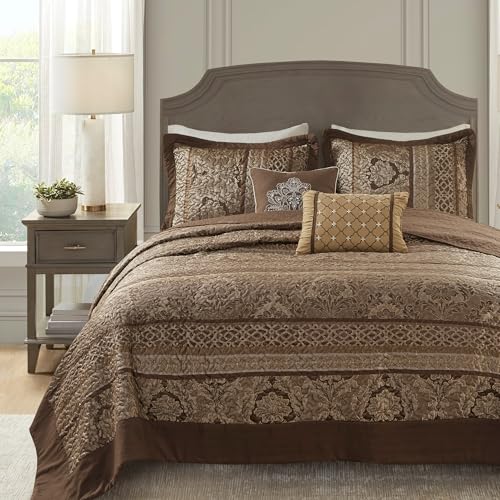
Polyester jacquard quilted Woven stripe motif Embroidered decorative pillows Traditional lifestyle
How Do You Coordinate Bed Shams With Your Bedding?
How do you turn individual bedding components into a unified, visually coherent sleep environment? You coordinate bed shams with your duvet cover or comforter by matching fabric type and tone, cotton, linen, or polyester, for cohesion, or you select a complementary shade for contrast. Shams are used in precise sizes: Standard (~26″ x 20″), Queen (~30″ x 20″), King (~36″ x 20″), and Euro (~26″ x 26″).
They come in various materials, including organic cotton, which offers breathability and texture. You layer standard or king shams behind sleeping pillows, positioning Euro shams farther back for volume. For modern color-blocking, you pair patterned shams with simpler pillowcases. A pop of color emerges when you mix individual shams that harmonize, though matching sets yield the most polished finish.
Recommended Products

Bed pillow offers exceptional comfort for a better night's sleep

Exquisite Waffle Weave Design: The delicate waffle weave textured patternan elegant, three-dimensional look. With its exquisite design, breathable fabric, and comfortable hand feel, it creates a relaxing and restful atmosphere. and skin-friendly.

Exquisite Waffle Weave Design: The delicate waffle weave textured patternan elegant, three-dimensional look. With its exquisite design, breathable fabric, and comfortable hand feel, it creates a relaxing and restful atmosphere. and skin-friendly.
Leave a Reply