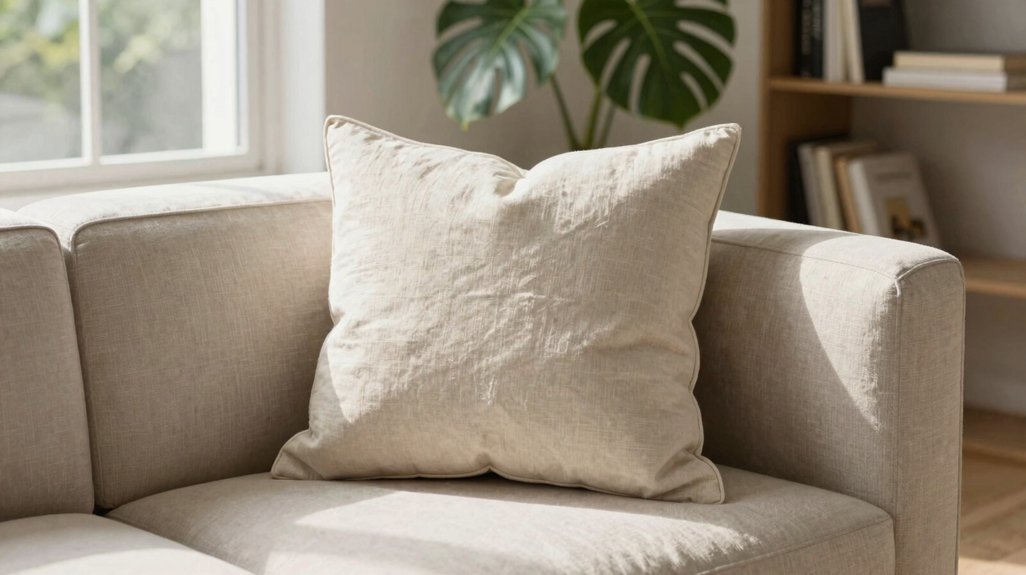
You’ve likely encountered pillow shams in boutique hotels or styled magazine spreads: those structured, decorative coverings that frame sleeping pillows with tailored precision.
Unlike standard pillowcases, which prioritize utilitarian protection, shams deliver aesthetic architecture through flanged edges, envelope closures, and textural finishes ranging from matelassé to jacquard.
They serve a distinct functional hierarchy in bedding assemblies, positioned behind or atop core sleeping surfaces to create dimensional layering.
Understanding their construction specifications, sizing conventions, and placement protocols changes how you approach bed styling.
What Is a Pillow Sham?
Although you may already own several pillowcases, you likely haven’t given much thought to the distinct category of bedding known as the pillow sham. A pillow sham serves as a decorative cover for a bed pillow, creating a polished, styled look rather than functioning as your primary sleeping surface.
Key Structural Features
Pillow shams differ from basic pillowcases through several technical specifications:
- Decorative face: More ornate front panel, often with flange borders on three or four sides
- Closure type: Envelope-style back or hidden closure maintains exterior neatness
- Fabric selection: Jacquard, silk, or textured cotton blends predominate
Standard Sizing Specifications
| Size | Dimensions |
|---|---|
| Standard | 20″ × 26″ |
| Queen | 20″ × 30″ |
| King | 20″ × 36″ |
| Euro shams | 26″ × 26″ |
Designers position these decorative pillow covers to frame sleeping pillows near the headboard, completing the layered bedding ensemble.
Recommended Products

Pillow Case Pack of 2 – Pillowcase pack of 2 with each pillowcase measuring 20 by 40 inches (Pillows are not included).

Pillow Case Pack of 4 – Pillowcase pack of 4 with each pillowcase measuring 20 by 26 inches (Pillows are not included).
Pillow Sham vs. Pillowcase: Key Differences
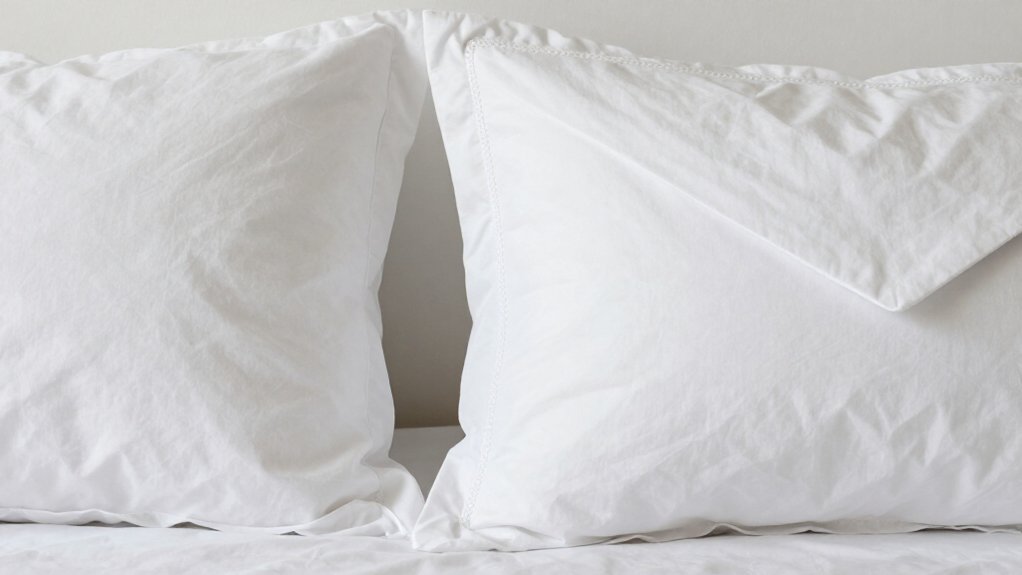
You’ve got the basic definition of a pillow sham, so now let’s look at how it stacks up against its functional counterpart, the pillowcase.
Pillow Sham vs. Pillowcase: Core Distinctions
| Feature | Pillowcase | Sham |
|---|---|---|
| Primary purpose | Protection from dirt, oils, sweat | Decorative bed styling |
| Opening style | Open end | Envelope closure, hidden overlap, or zipper |
| Design details | Minimal | Flange, embroidery, piping, matelassé |
A pillowcase serves utilitarian needs; you slip it on via its open end for direct pillow insertion. A sham prioritizes aesthetics, concealing closure mechanisms at the back to present an uninterrupted, bordered face. You’ll position shams behind or atop sleeping pillows.
Shams come in Standard (20″ × 26″), Queen (20″ × 30″), and King (20″ × 36″). Matelassé options earn near-perfect ratings: Juliet scores 4.9/5 (177 reviews), Montauk 4.9/5 (156 reviews), Vienna 5.0/5 (267 reviews).
Recommended Products

Exquisite Velvet Comfort: Crafted from premium, ultra-soft velvet, our decorative pillow covers deliver luxurious softness and rich, velvety texture. Experience an exquisite touch that instantly elevates comfort and adds a sophisticated sensory appeal to your living space.

Exquisite Waffle Weave Design: Classic yet stylish waffle weave design features three-dimensional, puffy and elegant appearance, brings casual sophistication and create a soothing retreat. Available in various colors, these pillow shams perfectly complement any home décor. Just decorate your comfortable pillows with our waffle weave pillowcase covers
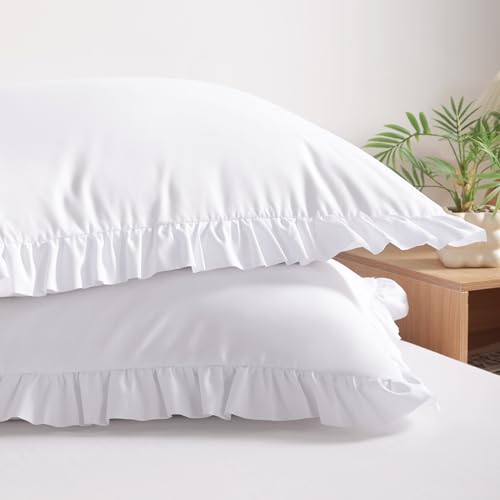
DECORATIVE RUFFLED EDGE: Soft ruffled trim adds texture and dimension for an easy bedding refresh. The versatile design complements farmhouse, romantic, and modern bedroom decor.
How to Choose Pillow Shams: Size, Color, and Fabric
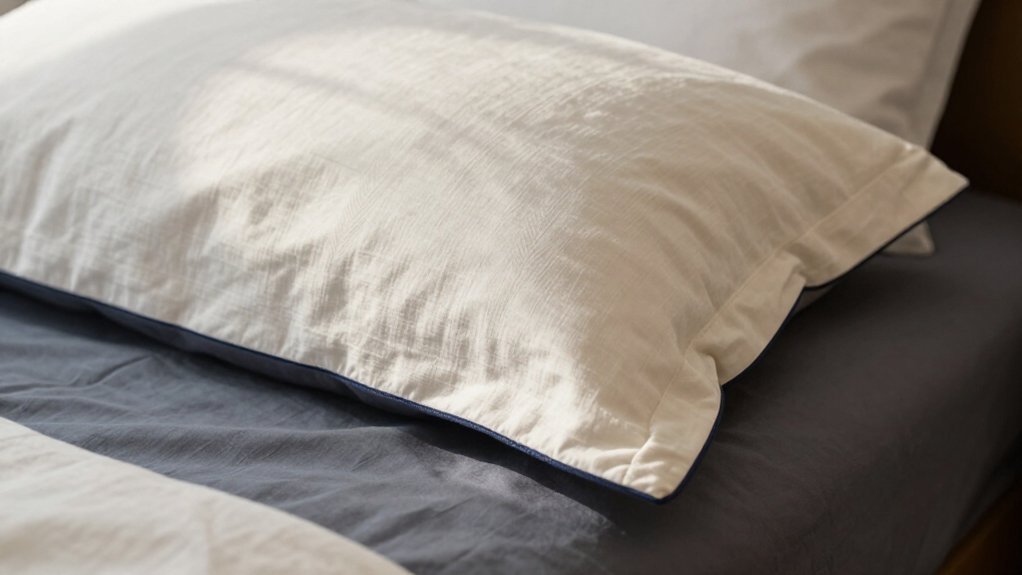
Selecting the appropriate sham begins with dimensional alignment to your existing pillow inventory. Match your pillow dimensions precisely: Standard (20″ x 26″), Queen (20″ x 30″), King (20″ x 36″), or Euro (26″ x 26″). Standard or king shams accommodate most sleeping arrangements, while Euro shams serve decorative layering functions.
Color Selection
Choose tones that integrate with your bedding ensemble: whites, pearl, linen, or slate establish cohesion; contrasting hues create visual focal points.
Fabric Considerations
Evaluate fabrics like cotton for breathability, matelassé for dimensional texture, or silk-like jacquard for refined tailoring. Note that decorative constructions, particularly heavily textured matelassé or embroidered styles, often compromise softness and demand delicate care protocols.
Verification Protocol
Consult product specifications and user ratings; premium matelassé options typically achieve 4.9–5.0 star averages across substantial review volumes. Confirm tactile properties and maintenance requirements before purchase.
Recommended Products

BOHO PILLOW SHAMS:Off White pillow shams standard 20x26IN set of 2(No Pillow Insert Included);Face:Face:50%Cotton 50%Polyester Jacquard; Reverse: 100% Plain Cotton

BOHO PILLOW SHAMS:White pillow shams standard 20x26IN set of 2(No Pillow Insert Included);Face:Face:50%Cotton 50%Polyester Jacquard; Reverse: 100% Plain Cotton

Pack of 2 Queen size pillowcases 20"x26" Pillows are not included.
Standard Pillow Sham Sizes Explained
You’ll need to understand how Standard Sham Dimensions (typically 20″ x 26″) compare to King and Euro Sizes before selecting inserts for your bedding configuration. Standard shams accommodate pillows proportionate to twin, full, and queen mattresses, whereas king shams measure 20″ x 36″ and Euro shams present a 26″ x 26″ square format.
Match your sham’s listed width and length precisely to your insert dimensions, accounting for envelope closures and fabric allowances that affect fit.
Recommended Products

MODERN FARMHOUSE BEDDING – Decorative 20" x 36" king sham features a matelasse quilted stitching technique and is perfect for layering on top of your bedding for an elegant look

MODERN FARMHOUSE BEDDING – Decorative 26" x 26" euro sham features a matelasse quilted stitching technique and is perfect for layering on top of your bedding for an elegant look

MODERN FARMHOUSE BEDDING – Decorative 26" x 26" euro sham features a matelasse quilted stitching technique and is perfect for layering on top of your bedding for an elegant look
Standard Sham Dimensions
When you’re outfitting a bed, standard pillow shams serve as the foundational layer of your sleep system’s textile architecture. Common sizes include standard dimensions of 20″ x 26″, which accommodate the most prevalent pillow category in residential bedding configurations.
Technical Specifications
You’ll find these measurements represent the baseline industry standard, though manufacturers implement slight variations. Some brands engineer roomier dimensions to prevent over-stuffed corners and saggy edges, ensuring structural integrity across the sham’s surface plane.
Verification Protocol
Before procurement, confirm your sham’s length and width align precisely with your pillow’s specifications. Product sizing notes warrant careful review, as dimensional tolerances fluctuate between manufacturers.
Many listings designate standard shams as the best option for twin, full, and queen bed configurations, reflecting the unified pillow sizing taxonomy within these mattress categories.
King and Euro Sizes
Although standard shams anchor most residential bedding configurations, king and Euro dimensions address specialized spatial requirements in layered textile assemblies.
King Pillow Shams
You’ll find King pillow shams measure approximately 20 in x 36 in. They’re built for king-sized bed pillows and deliver wider, more traditional coverage across your front pillow layer.
Euro Pillow Shams
You’ll encounter Euro pillow shams at 26 in x 26 in. These square decorative forms create vertical stacking at the headboard, establishing height behind primary sleep surfaces.
Comparative Specifications
| Sham Type | Dimensions |
|---|---|
| Standard | 20 in x 26 in |
| King | 20 in x 36 in |
| Euro | 26 in x 26 in |
Selection Protocol
When you’re purchasing, verify brand-specific sizing. Some lines run “roomy” for fuller corners. You’re avoiding sagging or excess fabric by cross-referencing against standard pillow dimensions rather than relying on generic measurements alone.
Pillow Sham Styles: From Matelassé to Silk
You’ll find matelassé shams deliver substantial tactile dimension through their quilted, raised weaves, typically rendered in diamond or stitched configurations across colorways including White, Pearl, Linen, Slate, Platinum, and Barely Blue. Silk alternatives offer a polished, hospitality-grade luster that reads as smooth rather than structural.
When selecting between these foundational layers, consider that matelassé constructions, such as the Juliet ($46.55–$155, 4.9★), Montauk ($135–$145, 4.9★), and Vienna ($125–$135, 5.0★), incorporate flanged edges and envelope closures for tailored integration, whereas silk prioritizes uninterrupted surface continuity.
Position either style as your rearmost sham layer to establish headboard framing, using matelassé for volumetric texture or silk for reflective polish.
Recommended Products
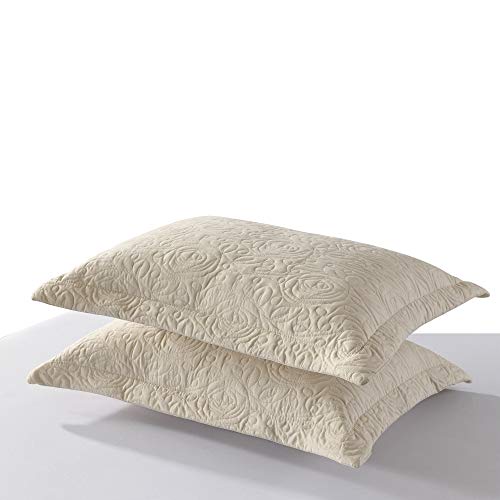
Material: front and back 100% polyester;filling 50% cotton, 47% polyester and 3% Nylon.Excellent performance: no skin irritation.
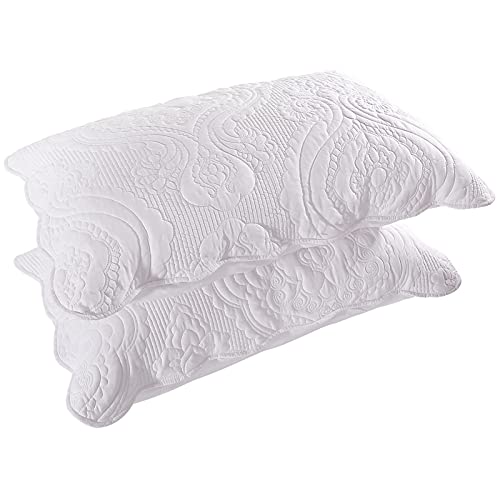
WHAT YOU CAN GET: Includes 2 white standrad size pillowcases (20"x26") with envelope closure, (No pillow inner); We are very confident in the quality of our quilted pillow shams

King Size: 20''x 36'' Inches, 2-inch flange, Set of 2. We encourage customers to measure their existing pillow dimensions before ordering to ensure the purchased pillowcase size is compatible.
Matelassé Texture Appeal
Because matelassé weaving produces a quilted, raised texture without relying on supplementary embroidery or beading, these pillow shams deliver noticeable visual dimension while maintaining a relatively flat profile against the bedding plane. You’ll find the matelassé texture changes a simple decorative covering into a sophisticated center of attention.
Color Coordination & Tailoring
Popular collections arrive in White, Pearl, Linen, Slate/Platinum, and Barely Blue. These neutrals integrate smoothly with existing duvets and coverlets. The tailored flange construction on multiple sides ensures a crisp, structured presentation from the frontal view.
Price & Performance Metrics
Retail pricing spans a considerable range: Juliet (~$46.55, $155), Montauk (~$135, $145), and Vienna (~$125, $135). Customer validation remains exceptional:
- Vienna achieves 5.0 rating across 267 reviews
- Juliet maintains 4.9 rating from 177 reviews
- Montauk holds 4.9 rating with 156 reviews
You receive significant tactile interest without excessive loft.
Silk Elegance Benefits
While matelassé constructions deliver dimensional texture through woven relief, silk and silk-blend pillow shams introduce an entirely different tactile proposition: uncompromising surface smoothness with inherent luminosity****.
You notice how silk pillowcases catch ambient light, producing a polished, reflective finish that cotton or linen cannot replicate. This luminosity raises decorative pillows from mere accents to points of visual concentration within layered bedding compositions.
Key Benefits of Silk Elegance
- Surface reflectivity: Silk pillow shams distribute light evenly across the fabric plane, eliminating visual flatness.
- Thermal regulation: Natural protein fibers maintain breathable comfort across seasons.
- Friction reduction: Minimal fiber drag preserves hairstyles and skin integrity overnight.
When you pair silk pillow shams with matelassé counterparts, you create deliberate textural contrast: dimensional quilting against uninterrupted sheen. This juxtaposition defines contemporary luxury bedding, yielding a considered, hotel-grade aesthetic without excessive ornamentation.
Style Selection Tips
How do you navigate the spectrum from dimensional weave to liquid sheen when selecting pillow shams that anchor your bedding composition? You weigh pillow shams vs other decorative layers by evaluating texture, finish, and compositional intent.
Texture vs. Sheen: Core Distinctions
Matelassé pillow shams deliver raised, quilted dimensionality: the Juliet, Montauk, and Vienna styles run $46.55–$155 in palettes of White, Pearl, Linen, or Barely Blue. These score 4.9–5.0 stars across 156–267 reviews. Silk-look options project liquid luster, functioning as luxury bedding focal points with hotel-grade polish.
Match matelassé to coverlets for tonal cohesion or contrast it for visual pop. Deploy silk-look faces where headboard sightlines demand reflective elegance. Specify flanged edges to frame sleeping pillows with tailored precision.
You coordinate sham fabric to duvet weight: matelassé amplifies warm tactility, silk heightens formal polish.
3 Ways to Arrange Pillow Shams on Your Bed
Whether you prefer a simple aesthetic or a more ornate bedding presentation, mastering pillow sham placement improves your sleep environment from functional to intentionally designed.
Stacked Arrangement
For streamlined bed styling, keep your sleeping pillows flat against the mattress. Point the bed shams outward, then place them on top. This stacked arrangement creates an orderly, finished look near the headboard.
Layered Arrangement
Lean sleeping pillows against the headboard. Display Euro shams behind them for height, then position standard or king shams in front. You’ll achieve a balanced, dimensional composition with clear visual hierarchy.
Asymmetrical Arrangement
Use larger and smaller shams on only one side. Color harmony and scale create intentional appeal without perfect symmetry.
Position shams where they’re most visible during daylight hours, typically behind sleeping pillows or as a headboard backdrop, so they function as structural decor.
Recommended Products
The set includes 2 pillowcases of 20 by 30 inches each

【MATERIAL】100% Pure Natural Linen with Pre Washed, very soft, becomes softer after every wash. 160 ± 5% GSM (ATTENTION: There may be a little deviation because of the washing preshrunk process.) Certified according to STANDARD 100 by OEKO-TEX for environmentally friendly, responsible and sustainable fabric production.

Floral Design: Features a cute pretty flower pattern that adds a touch of nature to your bedroom or college dorm decor ; ideal for botanical and cottage core aesthetics
How to Wash and Care for Your Shams
Once you’ve arranged your pillow shams to achieve your desired look, maintaining their structural integrity and surface quality through proper laundering preserves both appearance and longevity. You must always check the sham’s care label first, since fabrics with matelassé, jacquard, embroidery, or flanges often require gentler settings and different wash temperatures.
Always check your sham’s care label first—delicate fabrics like matelassé, jacquard, and embroidery need gentler handling to preserve their beauty.
In general, you should machine wash pillow shams in cold water on a delicate cycle. Use a mild detergent to protect textured stitching and decorative fronts from fading or distortion. Wash them separately or with like colors, and avoid harsh bleach and high-heat drying to help prevent color transfer and shrinkage.
For drying, tumble on low or air-dry when possible, since high heat can make embroidered or quilted detailing pucker and soften the flange’s structure.
- Cold water preserves color saturation: Breathable fabrics like cotton benefit most from 60°F wash temperatures, maintaining fiber tensile strength across repeated cycles.
- Low heat protects dimensional stability: Tumble drying below 140°F prevents shrinkage exceeding 3-5% in natural fibers.
- Proper storage sustains form: You should iron wrinkled shams on low settings or steam lightly through a cloth, then store them flat or loosely folded to maintain crisp edges and closure seams.
Understanding the difference between a sham and a standard pillowcase dictates your care approach, as shams typically incorporate more complex construction requiring specialized handling.
Recommended Products

RUSTIC EURO SHAM: Includes one 26 by 26 inch Euro Sham with button-style closures. Fill pillow not included.

Exquisite Waffle Weave Design: The delicate waffle weave textured patternan elegant, three-dimensional look. With its exquisite design, breathable fabric, and comfortable hand feel, it creates a relaxing and restful atmosphere. and skin-friendly.

Luxurious Softness & Comfort: Experience cloud-like comfort with these european pillow shams. Crafted from premium microfiber that’s exceptionally soft, breathable, and cool to the touch, they provide a serene sleeping or lounging experience
Leave a Reply